
18 November to 18 December
Devlog · OpenGame Game Jam #1 · solo entry
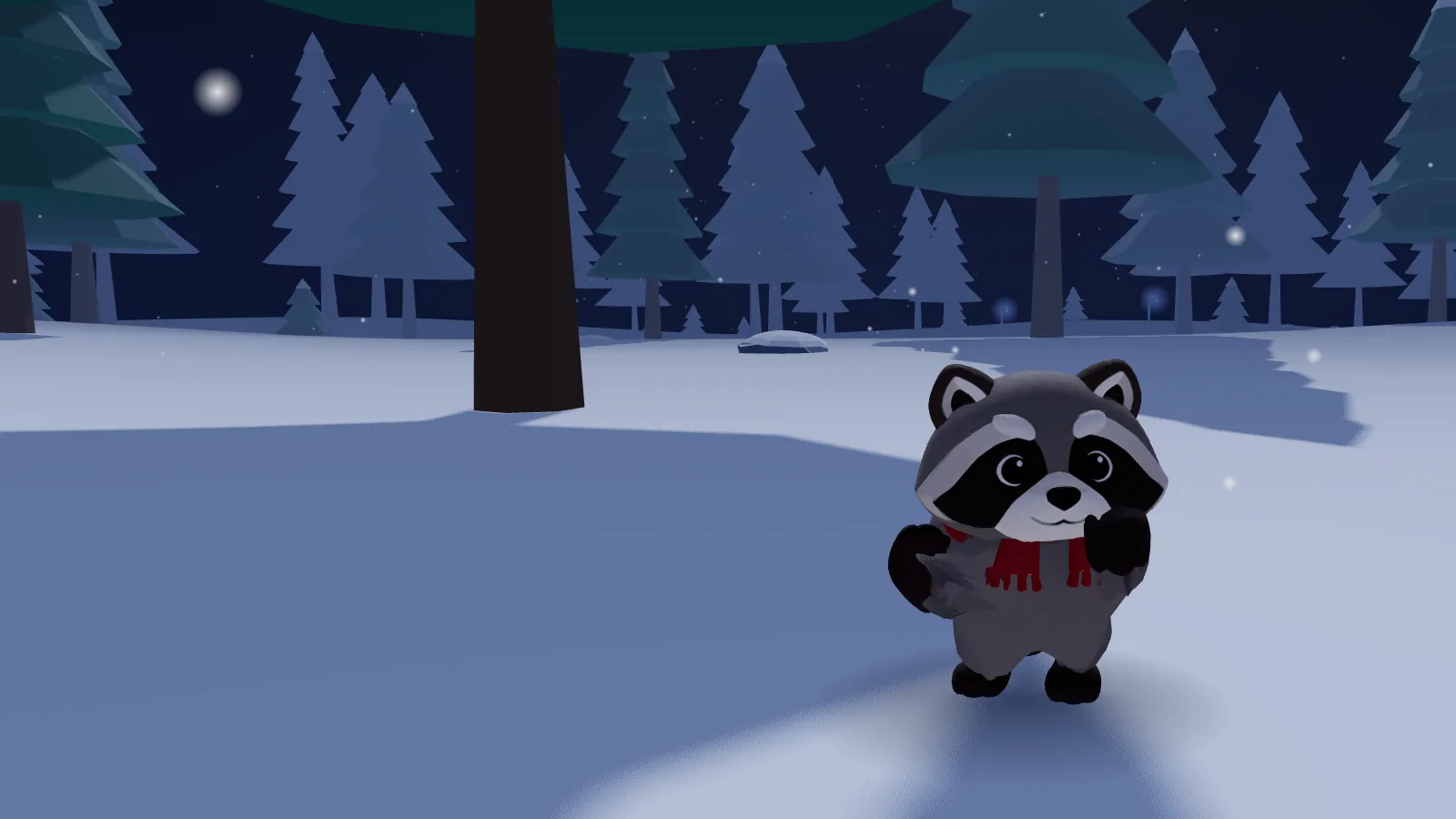
Jimothy Saves Christmas
A whole game in 31 days. This is the workshop.
I’m making a game in public for the OpenGame jam: one round raccoon in a red scarf, one snowy street, one night. What happens out there stays wrapped until launch. How it gets made doesn’t, so here is every tool, trick and number so far.
- 31days to build it, 18 November to 18 December
- 3303D models, each one started as a sentence
- 549sounds, from 1,387 takes
- 39bones in one small raccoon
- 22animations, every one written as code
- 25,000+lines of code by the end of day one
Day one, sped up
Thirty seconds of the first day
Design boards, a page of models scrolling past, and the street filling in from grey boxes to lit windows. The music and every click in it are the game’s own sounds.
The workshop
Five benches, one street
Everything in the game passes along the same line. A thing gets a look, then a shape, then a way to move, then a sound, and then it’s lit.
Find the look
Concept art, colour studies for each hour of the night, and one set of colours and fonts that the game and its pages share.
FigmaSculpt it
Every house, fence, chimney and icicle starts as a sentence and comes back as a textured 3D model.
MeshyGive it bones
A skeleton goes in and the movement is written as code, on a cloud machine that never opens Blender’s window.
BlenderGive it a voice
Footsteps, weather, a furnace kicking on at 3 am and every note the music is played with.
ElevenLabsLight it
It all meets in a browser tab: real lights, glass that bends what’s behind it, and snow that keeps your tracks.
three.js
Bones
One raccoon, 39 bones
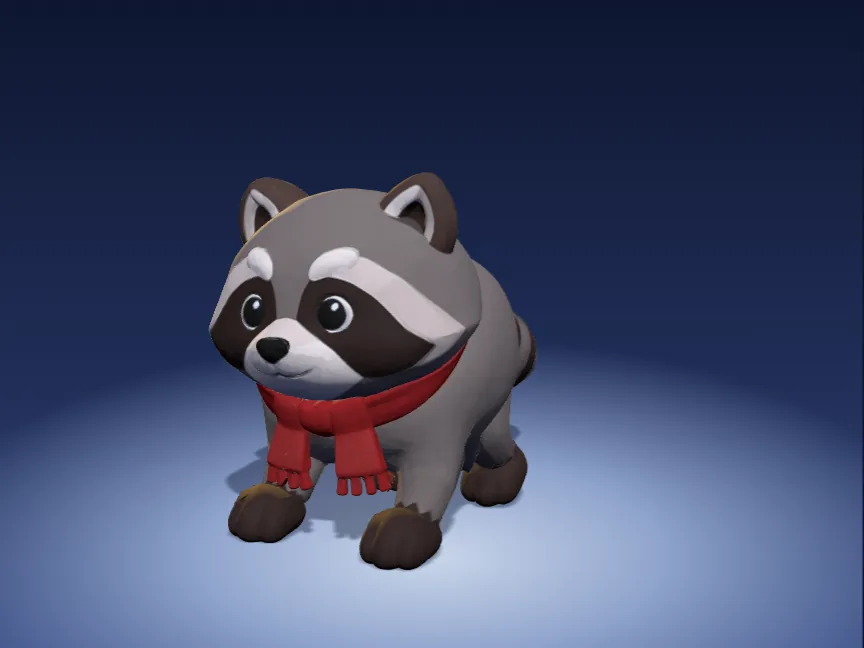
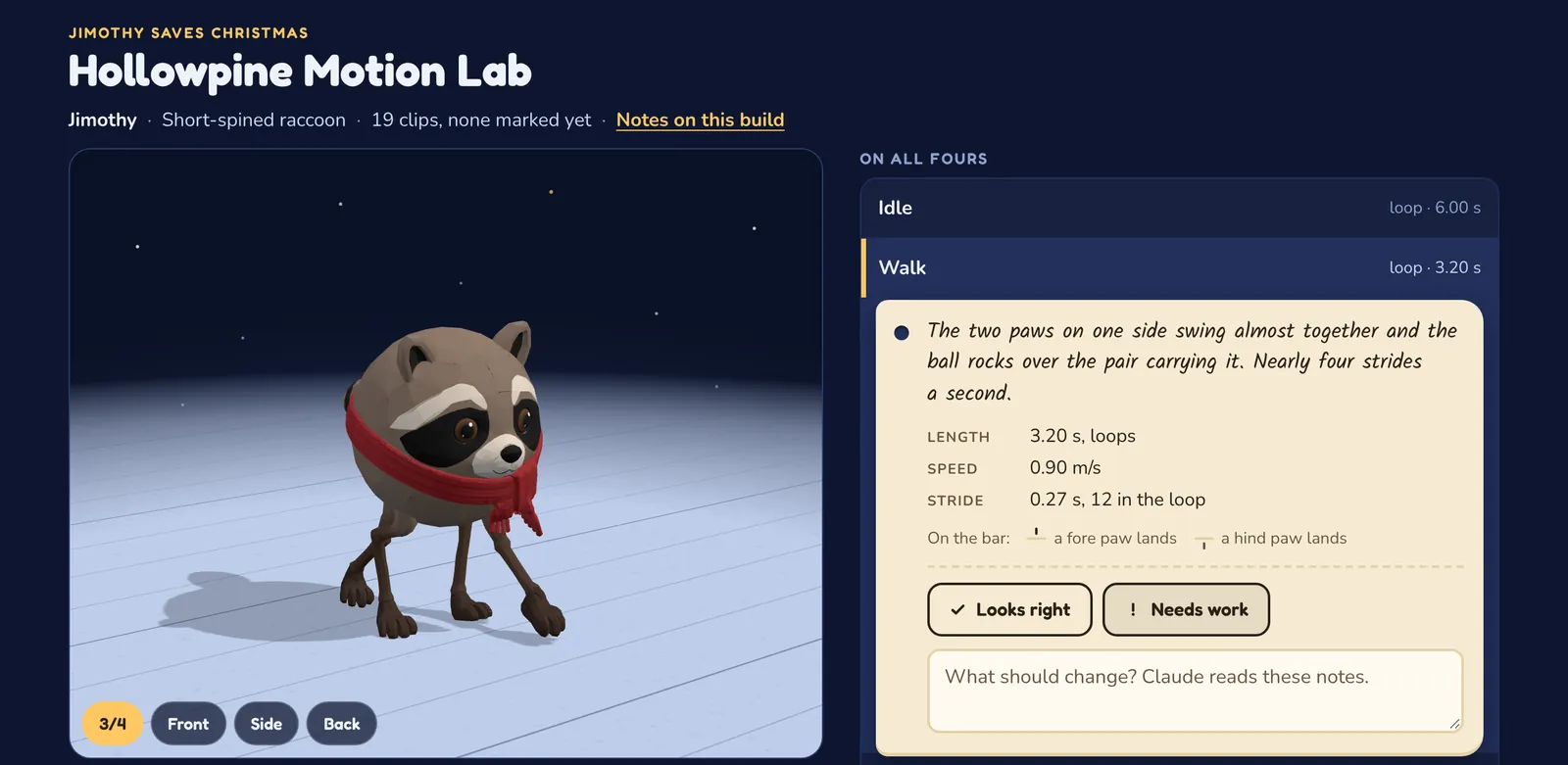
This is the real Jimothy, the same model and the same animations the game loads. Pick a move, and drag to turn him round.
No neck, on purpose
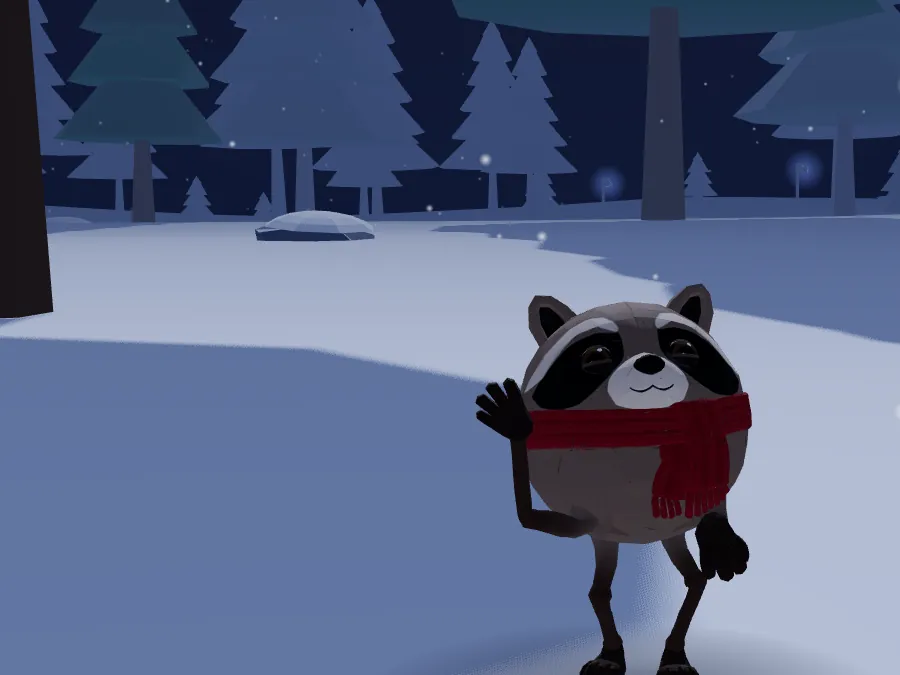
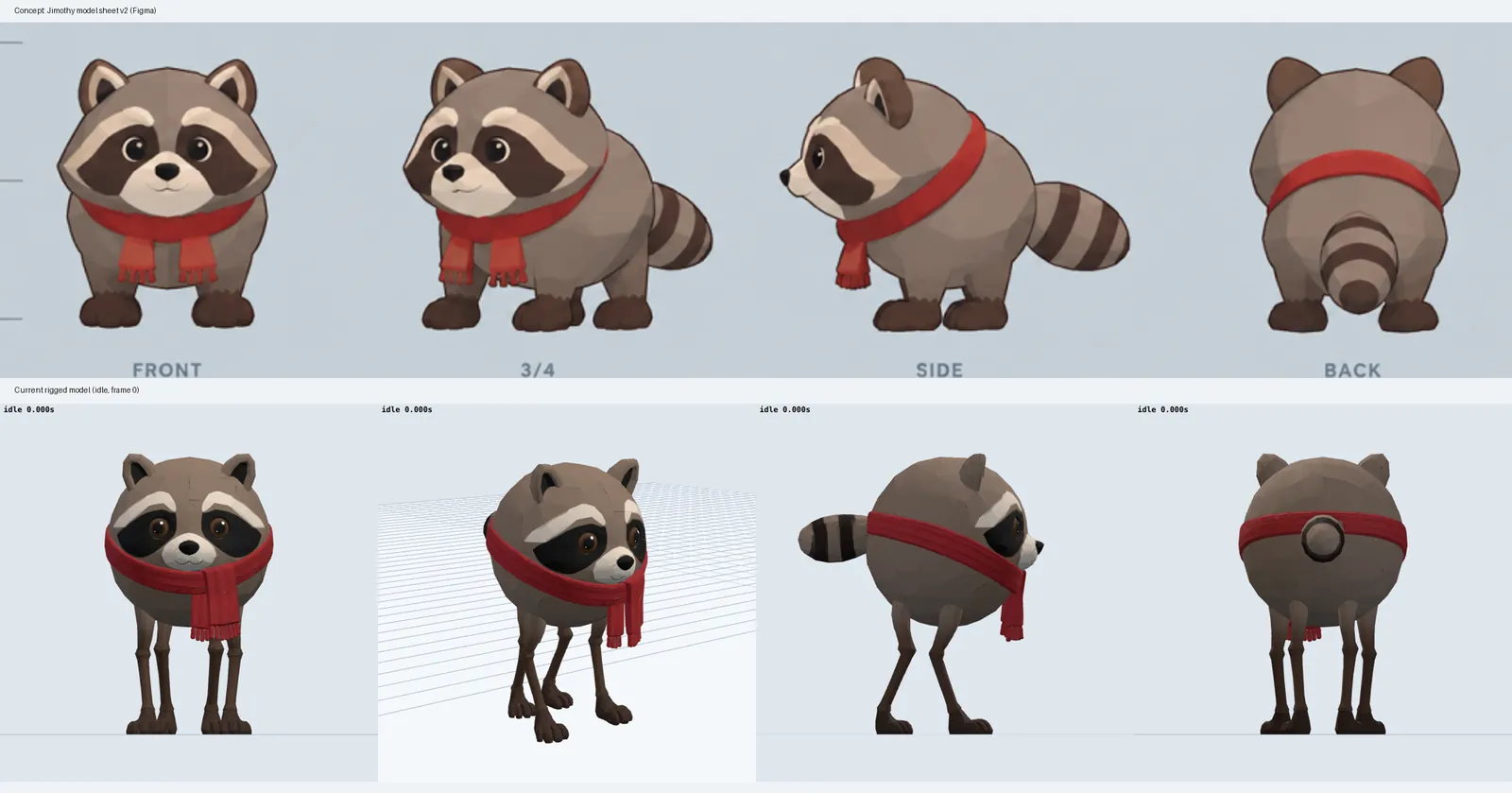
Jimothy is a raccoon with a very short spine: one round ball for his head, chest and hips, a short tail with three rings, and a red scarf. Animating a ball with a face is its own problem, so his face slides around the ball to look at things.
The sculpt arrives in pieces
A generated model comes back as one fused shape that is secretly thousands of loose scraps. They get welded together before a single bone goes in. His painted-on eyes were rebuilt as real spheres with upper and lower lids, so he can blink.
39 bones
Ears that turn, brows, eyelids, a jaw, three tail bones, four legs, and two chains of four bones in the scarf. The scarf isn’t animated by hand: it hangs on springs with gravity and drag, so it swings on its own when he stops.
Movement is code
Each animation is a small Python function: give it a time, get back a pose. A solver bakes it to keyframes and checks the result for sliding paws, sinking knees and legs asked to reach too far. A planted paw stays inside 96% of the leg’s reach or it starts to skate.
Measured, not eyeballed
He stands 30 cm tall. The early version’s legs measured 7 to 15% too long, so leg length became one number in the build, set to exactly 12 cm. On day two I asked for thicker legs and a fuller body: six new sculpts, one keeper, and the same skeleton moved across. That’s the Jimothy on this page.
Shapes
330 models, each one a sentence first
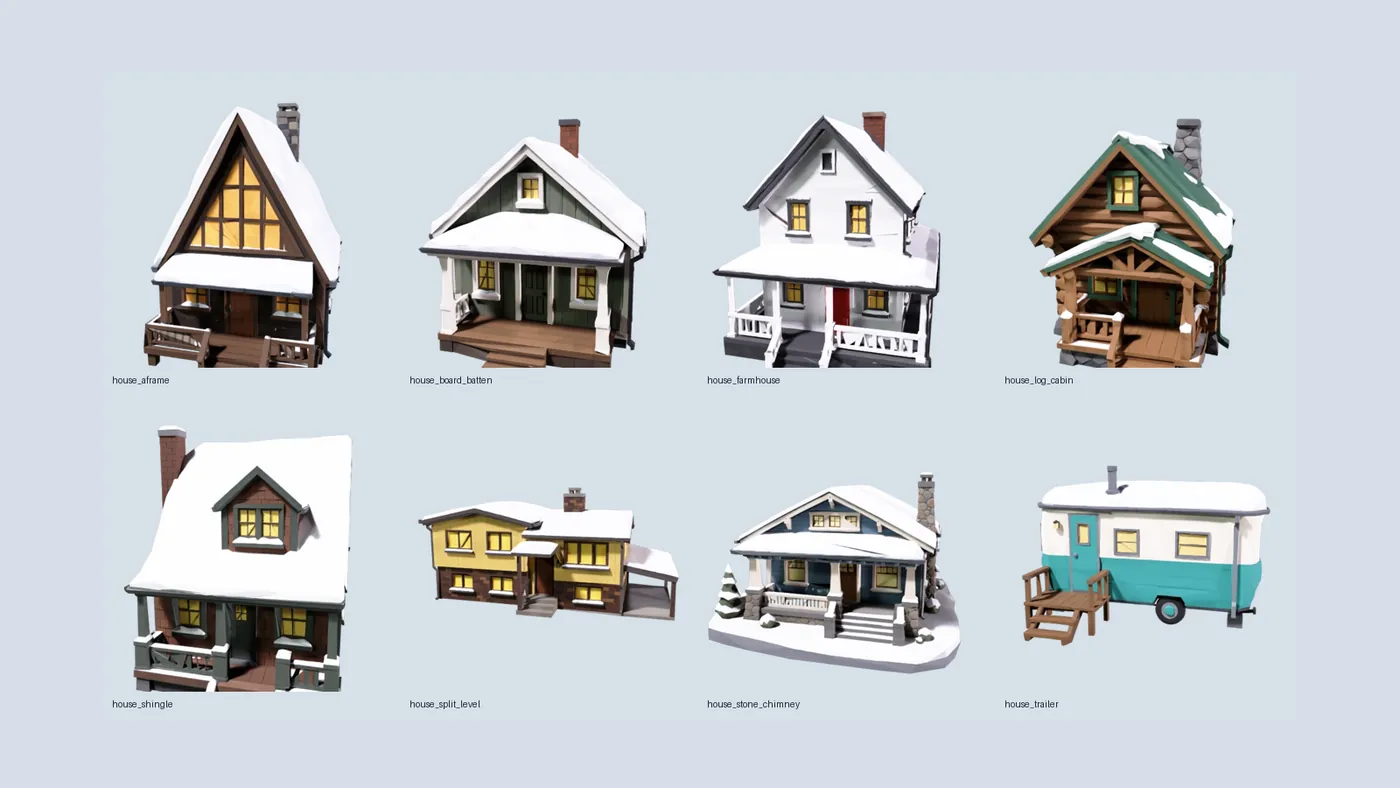
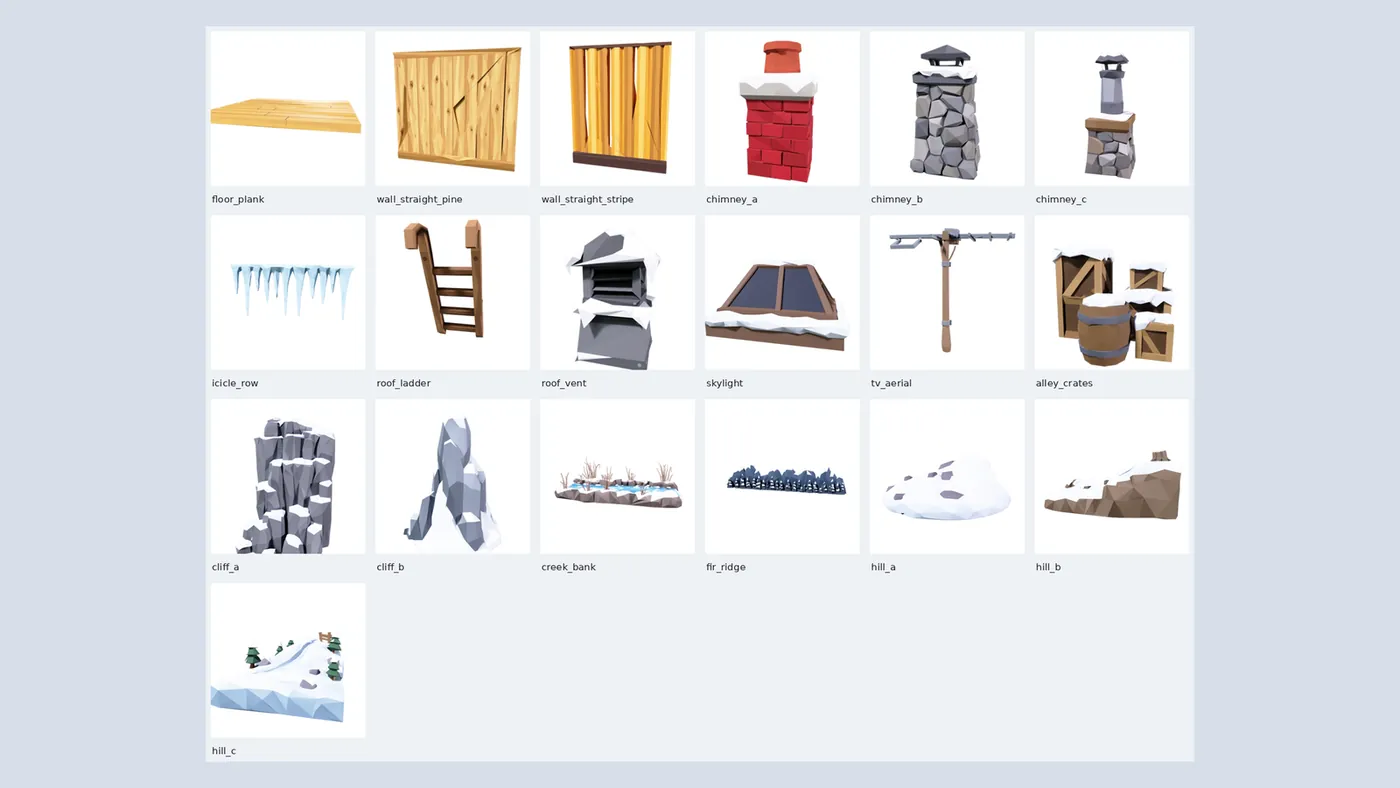
A street needs a lot of things in it: houses, fences, gates, sheds, snowmen, wreaths and string lights. I typed what I wanted into Meshy, one object at a time, and got a model back. The craft is in the choosing, fixing and lighting afterwards.
The prompt is the easy part
The line that mattered most in every prompt was the dull one: “single object only, no ground base, no scenery.” Without it a chimney arrives with its own little snowy island attached.
From 2.6 GB to under 20 MB
A raw model averages 7.5 MB, and the whole run came to 2.6 GB. The 316 world pieces that go in the game weigh 19.6 MB together, inside a 40 MB budget for the whole game.
Detail first
A flat-colour bake got the set down to 5.1 MB, and took the sofa cushions and door hinges with it. So the houses keep 1,024-pixel textures, everything else keeps at least 512, and windows get a glow mask so they can light up.
Sound
It sounds like a night
Every sound in the game is made this month too, with ElevenLabs: 549 of them so far. Here are six. Turn your sound on.
Two takes, at least
Every sound is generated at least twice. A private review page plays the takes side by side and I star the keepers, which is my favourite part of the night.
The music is played, not pressed
There’s no finished recording of the soundtrack. The game holds single notes of a celesta, a clarinet, a harp, a music box and an accordion, and plays them itself, so the music can follow the night. The Christmas lights on the houses blink in time with it.
18 MB for all of it
The whole game’s sound has to fit in 18 MB, and the first screen needs less than 1 MB before you can play. It’s at 17.4.
Light
Real light on handmade shapes
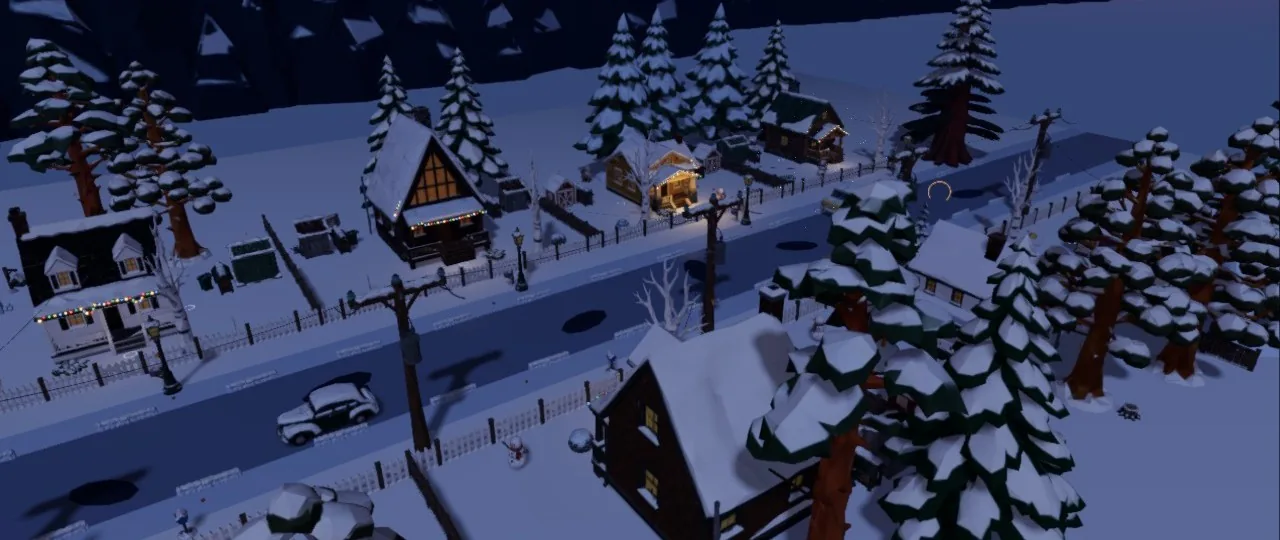
The game runs in a browser tab on three.js. The shapes stay simple and handmade, and the light is as real as a browser allows.
Real lights
Moonlight throws proper shadows and the sky itself lights the scene. Six real lamps move to wherever they’re needed most, so a street full of windows stays cheap to draw.
Glass that bends
Icicles, baubles and window panes refract what’s behind them. Soft shadows gather in corners, smooth surfaces pick up reflections, and bright things bloom.
Clean edges, three settings
Smooth edges are a must, so everything is anti-aliased. The game picks one of three looks, plain, glow or full, to suit the computer it’s running on.
The street
One camera that never moves
Every time the world changes, a job photographs the street from exactly the same spot. Because the camera never moves, the frames line up, and one afternoon turns into this.
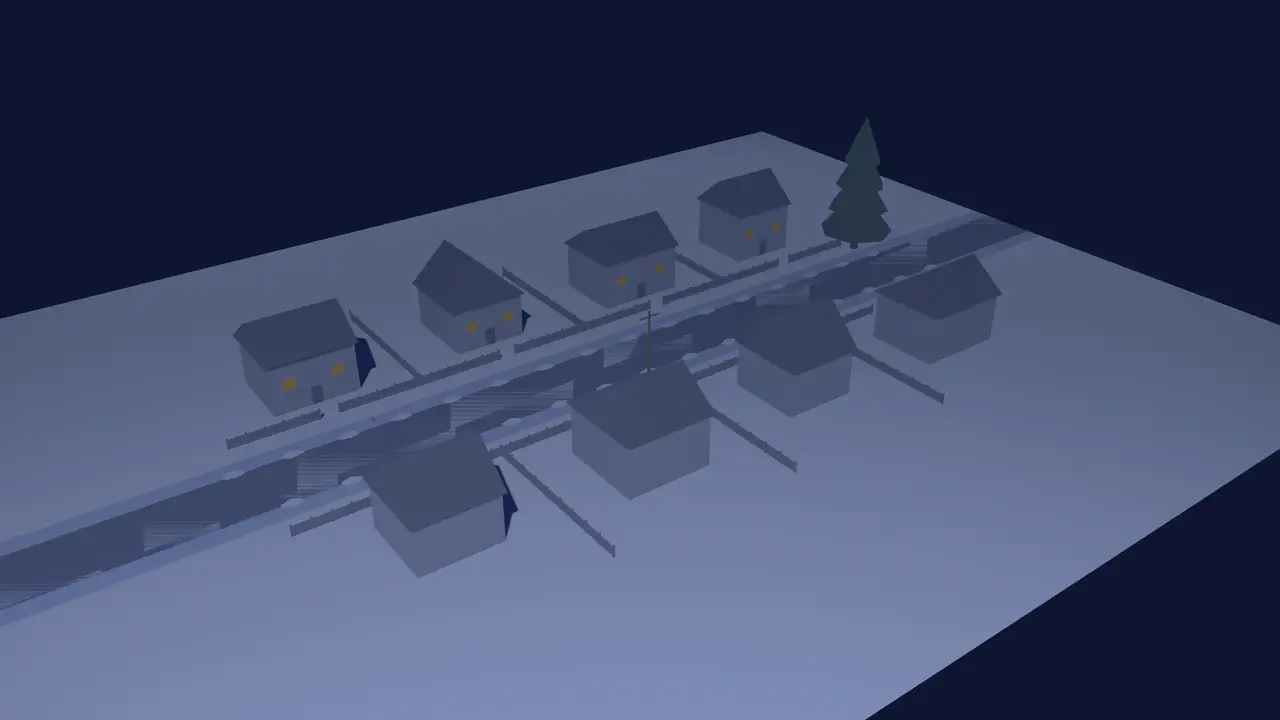
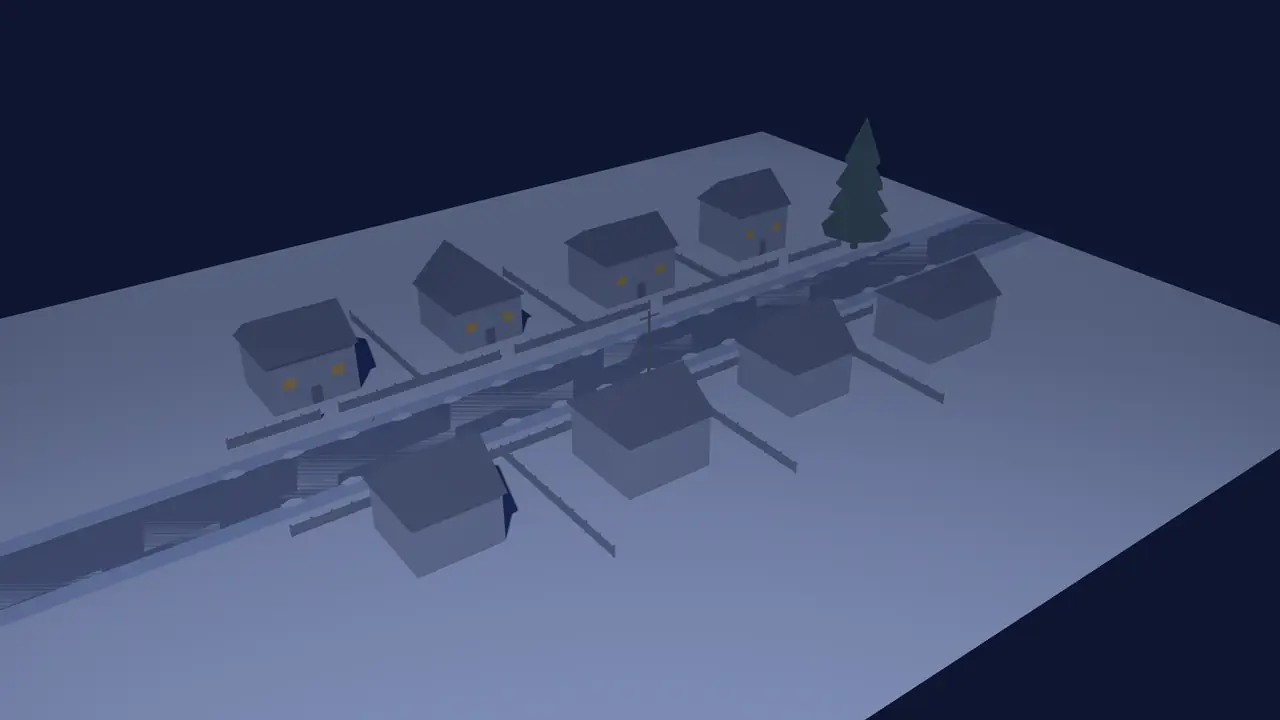
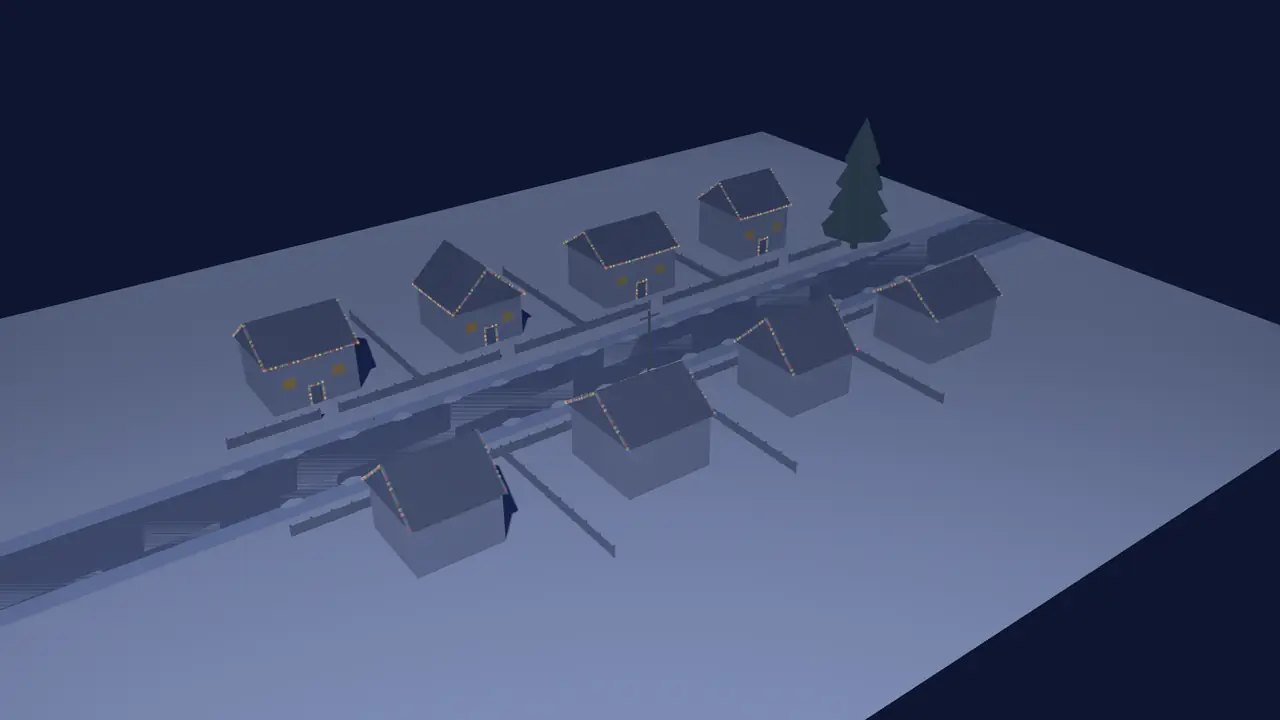
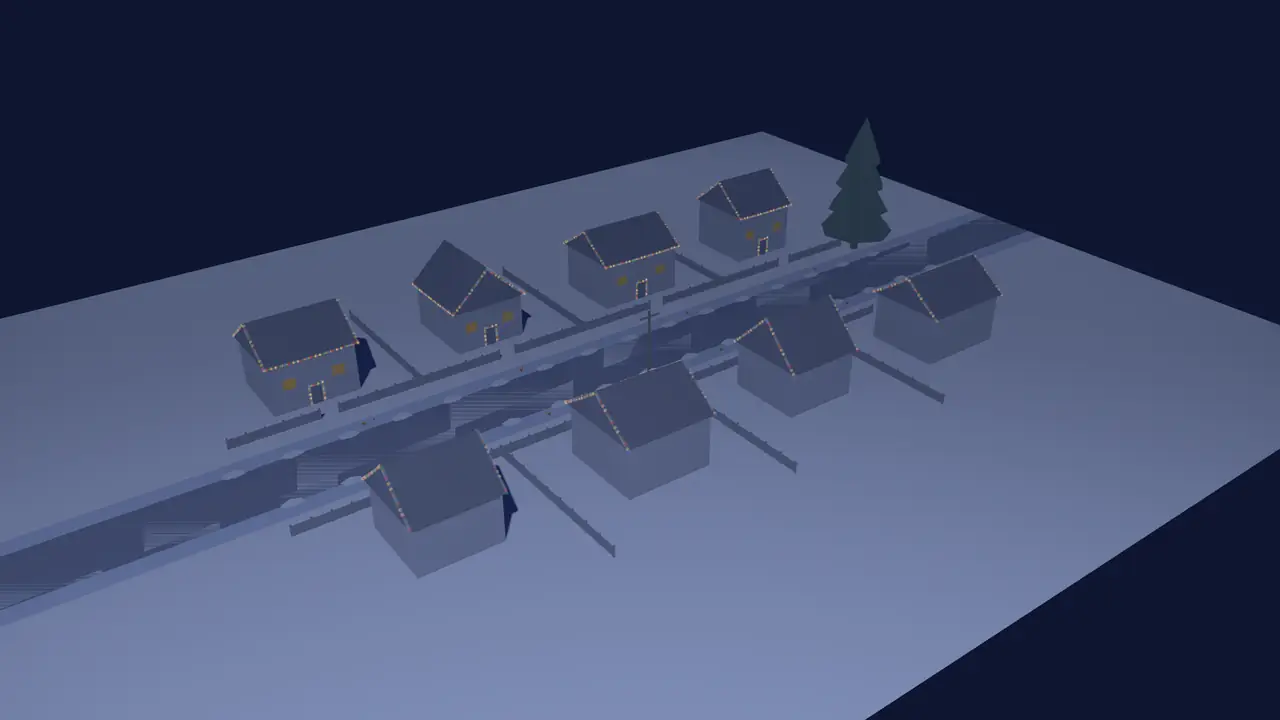
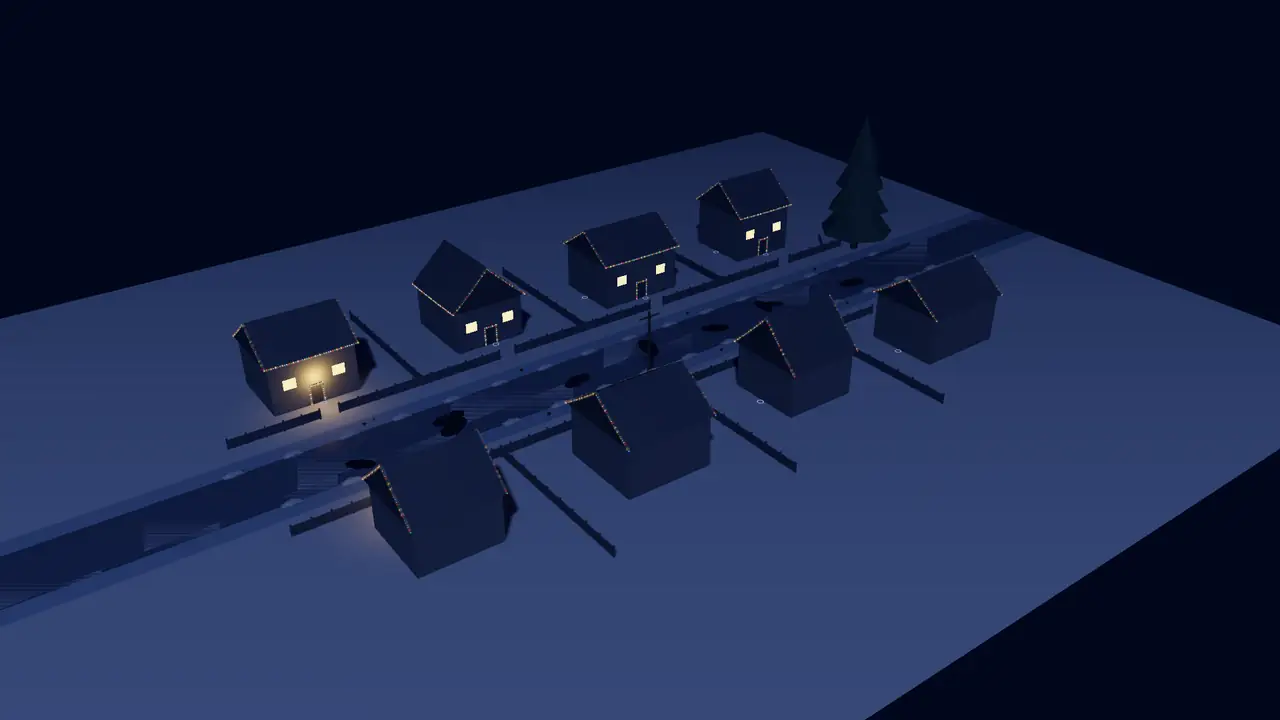
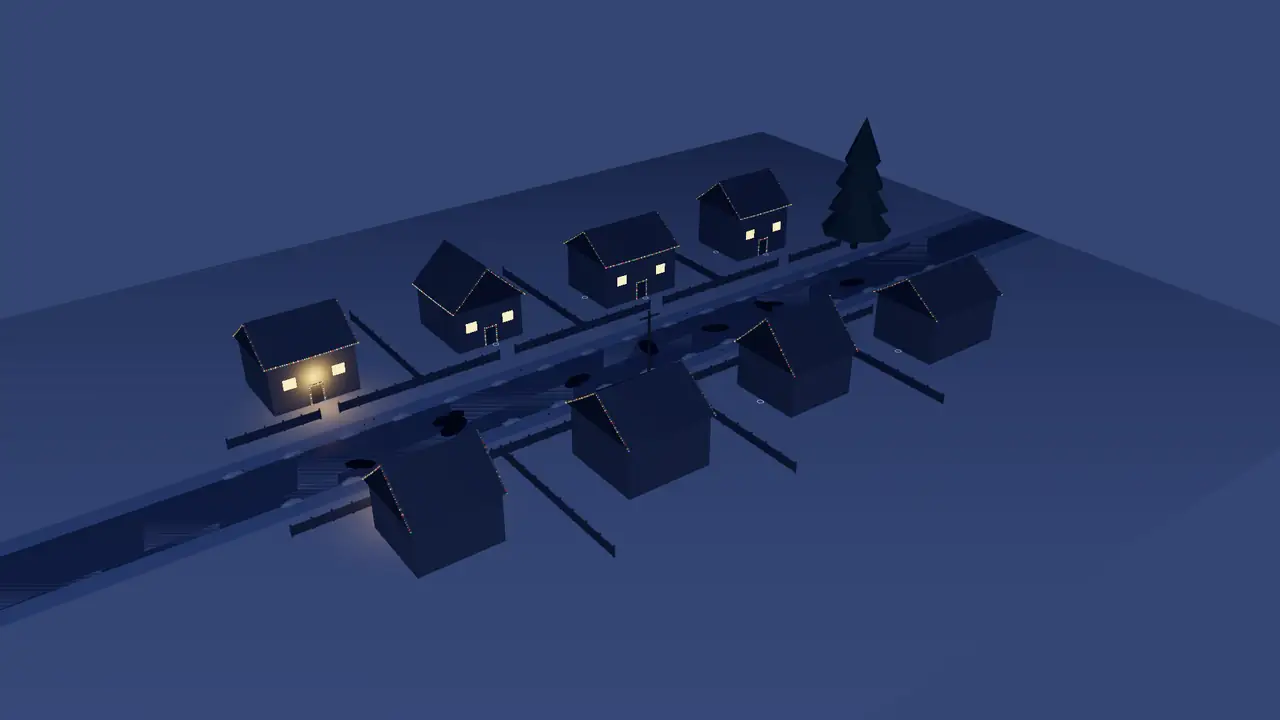
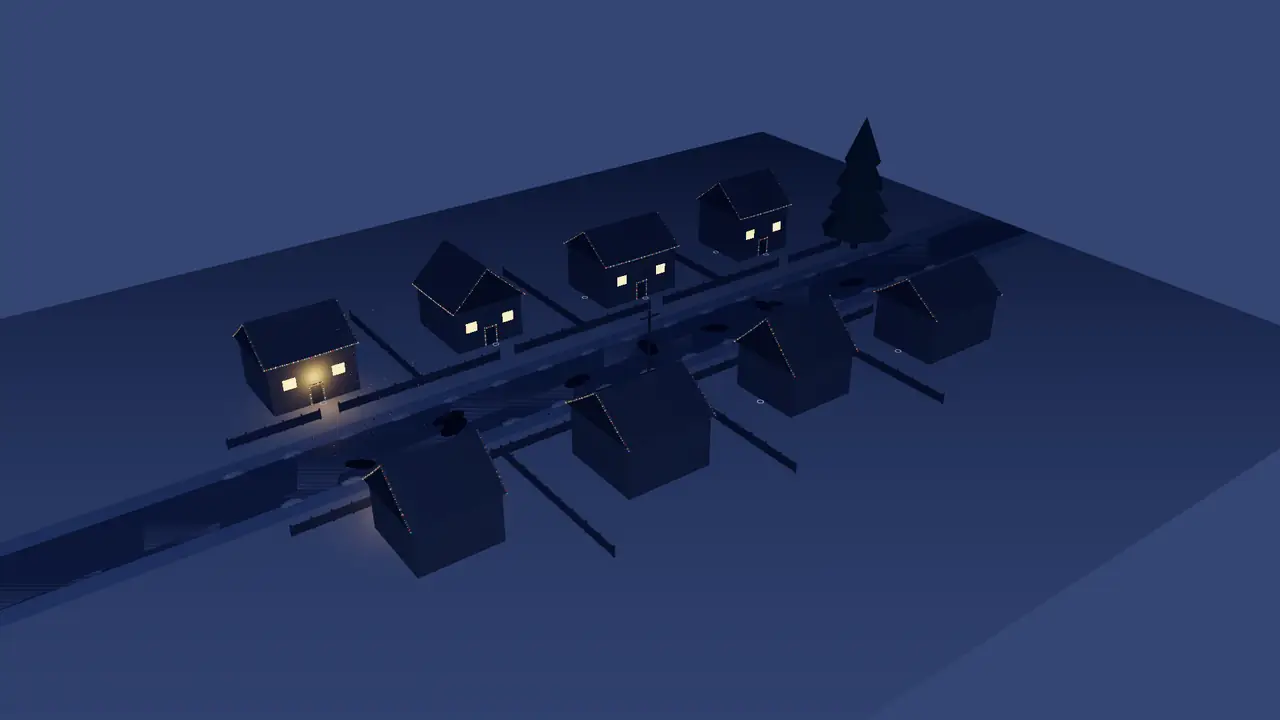
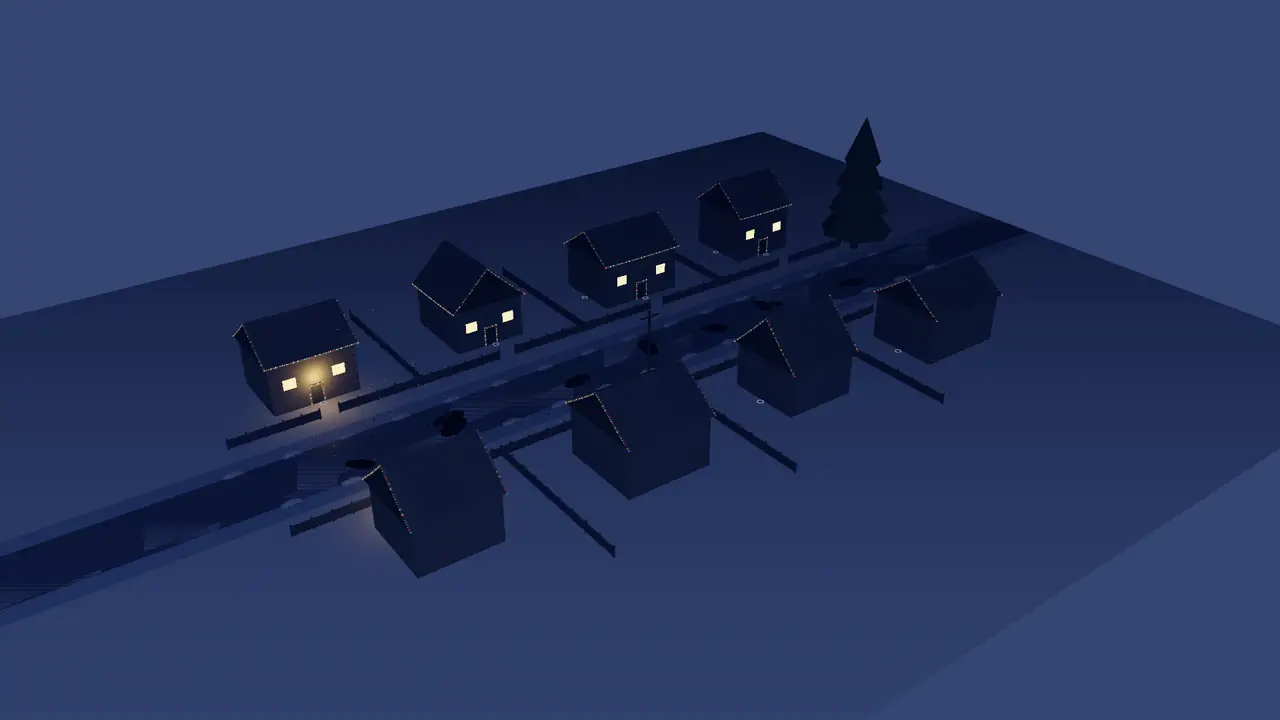
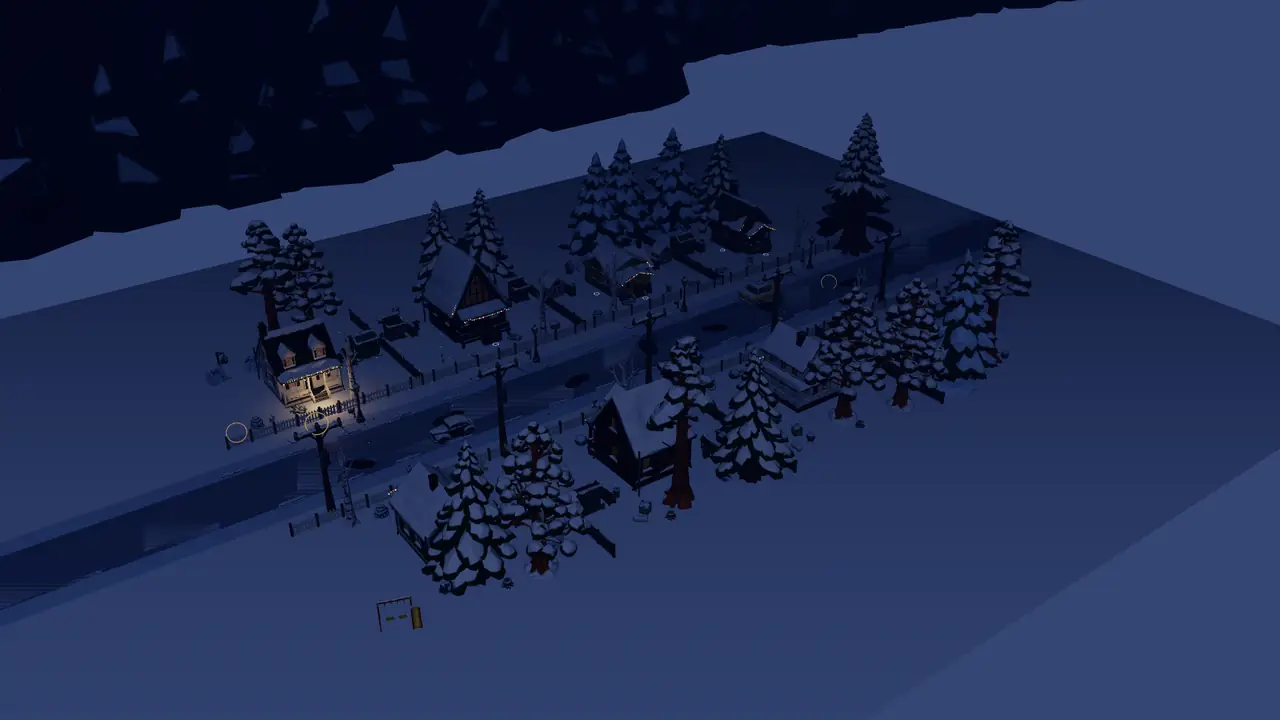
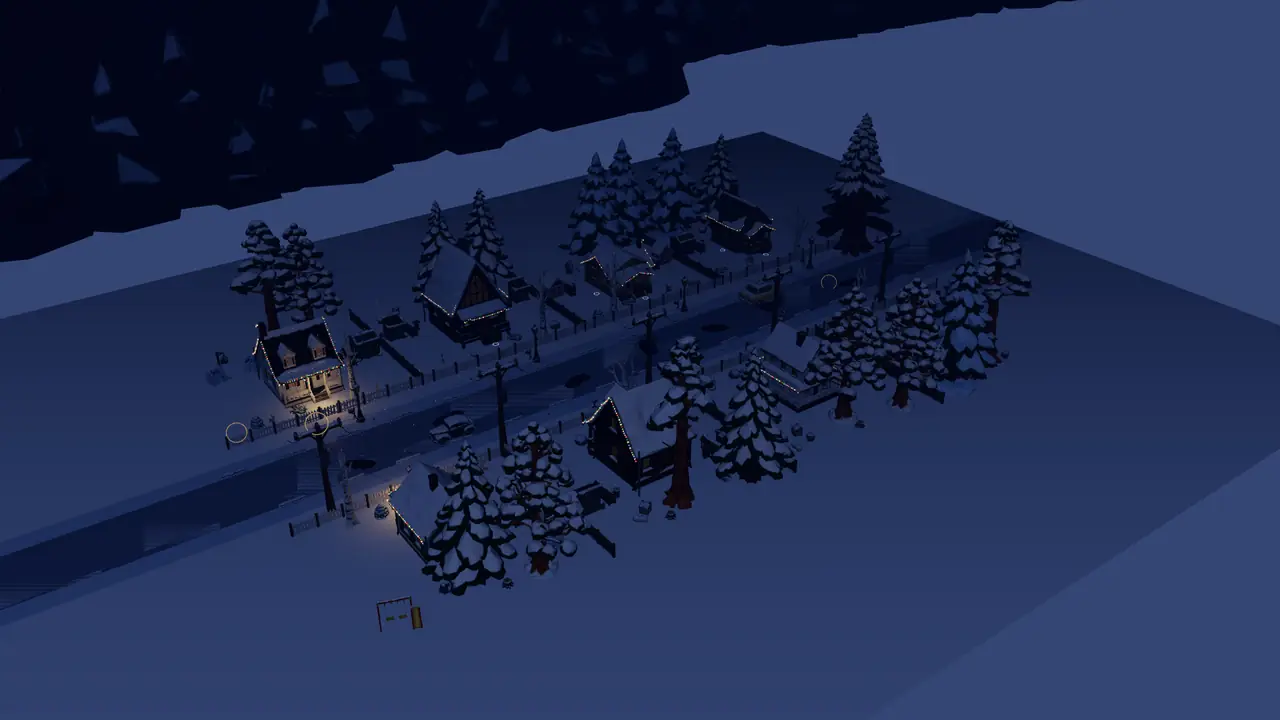 Wed 18 Nov · 9:44 pm PT
How the work runs
One person, a lot of threads
I’m the only entrant, but I’m not typing it all. I design and direct the game, and Claude writes the code.
I direct, Claude builds
A coordinator splits the work into threads: one for the world, one for the skeleton, one for sound, one for the pages. Each thread takes its job to a pull request, and nothing merges until I’ve looked.
Show me, or it didn’t happen
The one rule I had to make on day one. Every new model, sound or page arrives with a picture, a clip or a link I can open. Otherwise I’m building in the dark.
The cloud does the heavy lifting
Skeletons, animation and the street’s snapshots are all made on cloud machines with no screen. Only the sculpting runs on my Mac. A job re-photographs the street every four hours, which is where the timelapse comes from.
Spoilers are a build setting
Every devlog entry is marked Open, Teased or Sealed, and the build leaves sealed ones out until their date. A rule the build enforces can’t be forgotten on a tired night.
Still wrapped
What you do in the game, where everything is and who you meet stay under the tree until 18 December. This page grows as the game does, so come back for more of the workshop.
More games I’ve made: Beaver Football