
CLIENT GAME · BROWSER · GAME DESIGN, 3D, DEVELOPMENT + CMS
Tide Keepers.
A board game that grew into an island.
A board game about collective wealth that grew into a walkable island. Players pick a keeper, collect 40 path tiles, make choices that build or break their village, and ride out storms that flood the land they just walked. Behind it sits a content system the client’s editors run themselves.
The brief
The brief was to help people feel what collective wealth means: that a village is richer when its trust, knowledge and shared resources grow together, and poorer when one person hoards.
The route
It started as a digital board game. Partway through I built a second idea beside it, a walkable version of the same island, and NationSwell played both and picked the island. Seven milestones, in the order they happened:
Milestone 1
It started as a board game
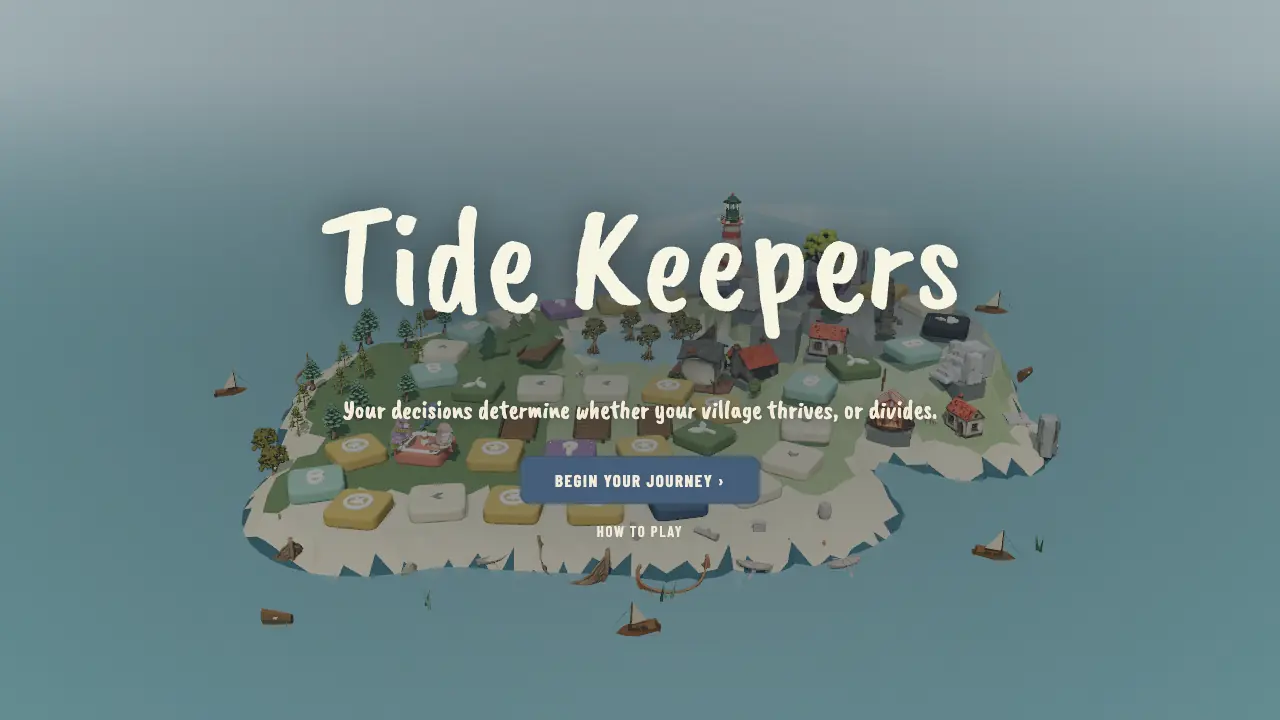
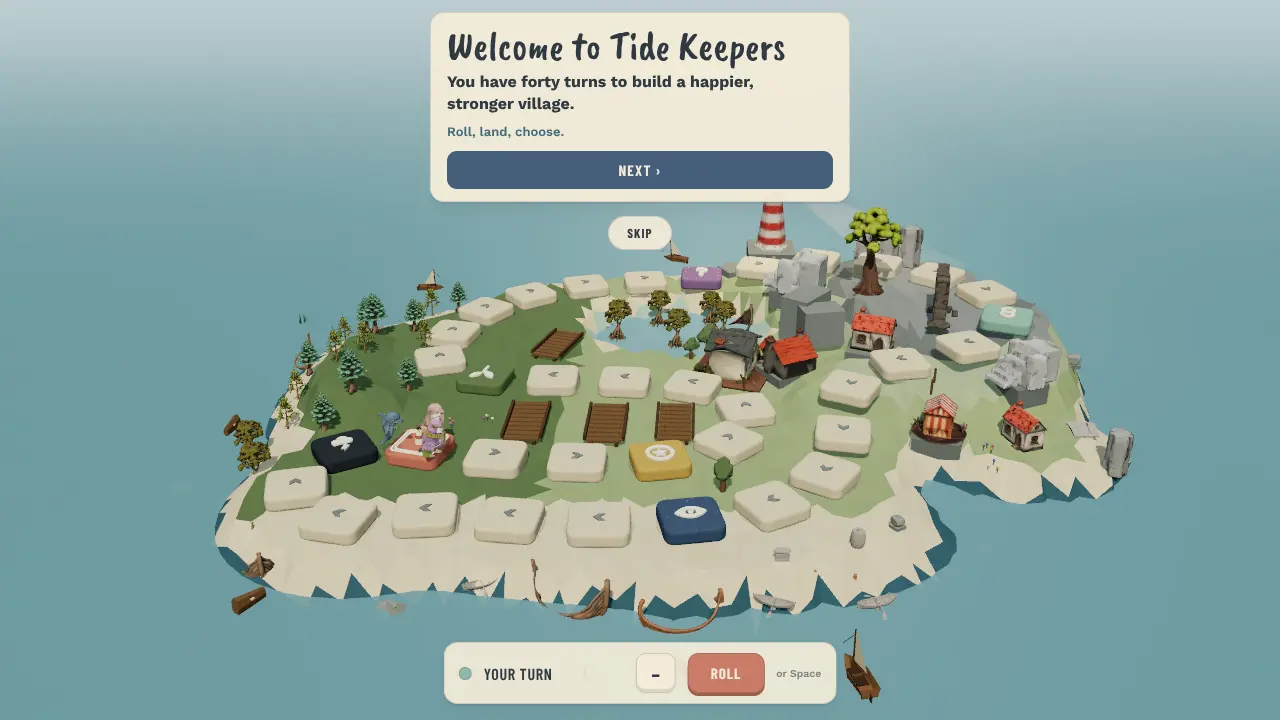
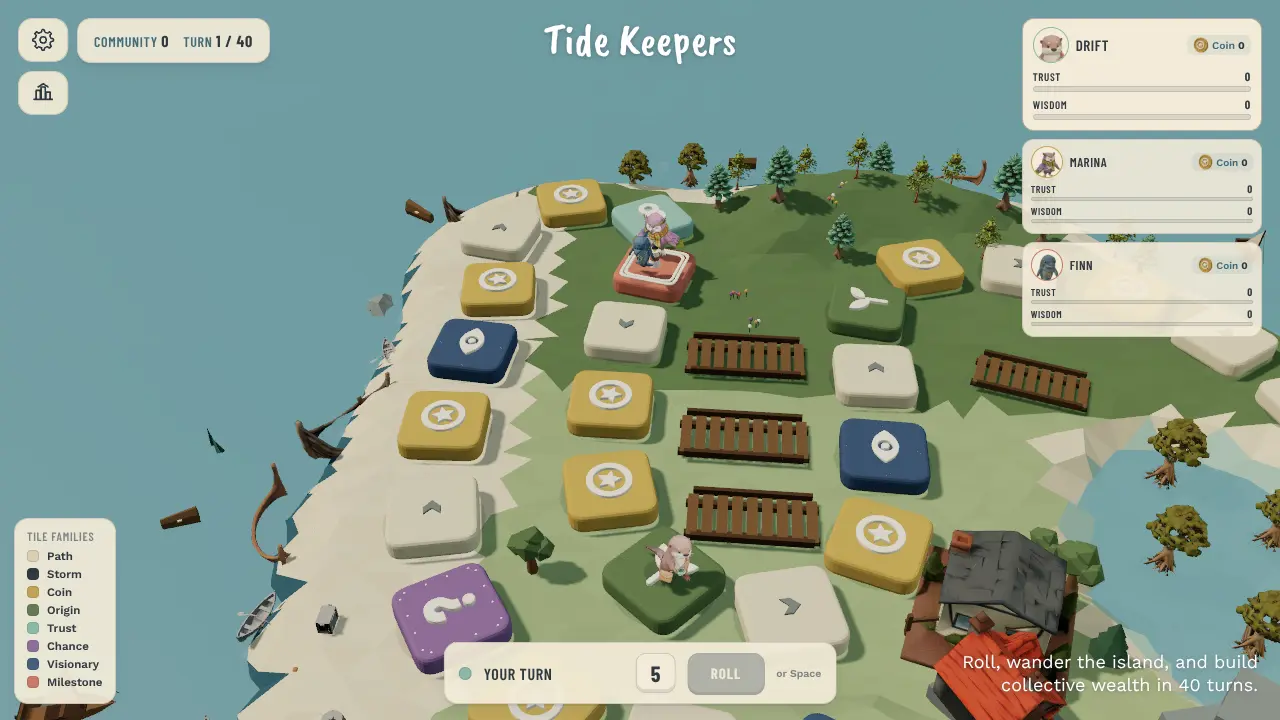
The first version was a digital tabletop. Every player is a keeper on a low-poly island diorama, viewed from above like a game board on a kitchen table. You roll a die, hop along a ring of raised tiles and resolve whatever you land on. There are 40 turns, then the tide settles and the game tells you what kind of village you built.
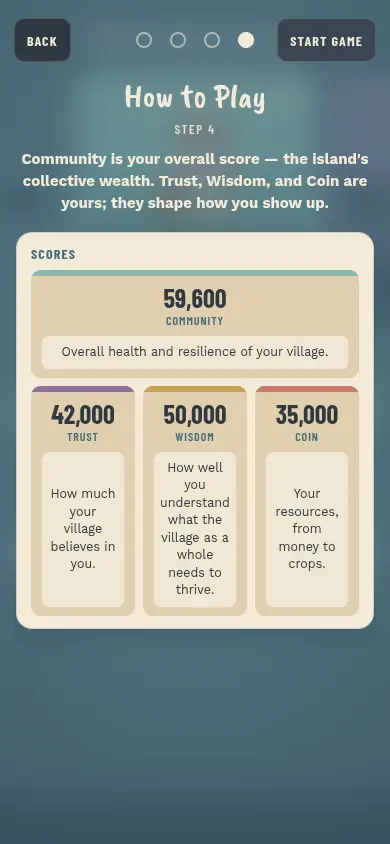
Each tile family carries one idea. Origin tiles ask where your family’s luck came from. Trust tiles put a neighbour’s request in front of you. Chance, Visionary and Milestone tiles move the story, and Storm tiles roll weather across the board that gathers, floods, holds and recedes, scarring the island where it hit. Four scores track the result: Coin, Trust, Wisdom and Community.
The creative foundation came from the team at What Else. They supplied image references and the original in-game text for every interactive tile, along with imagery and videos they generated as references for the characters and the board. My job was to turn that material into a playable game and keep it faithful as it moved into 3D.
There is no win or lose screen. The ending is tiered (Thriving, Still Standing or Weathered), because the point was never to beat anyone. It was to notice what your choices did to everyone else.
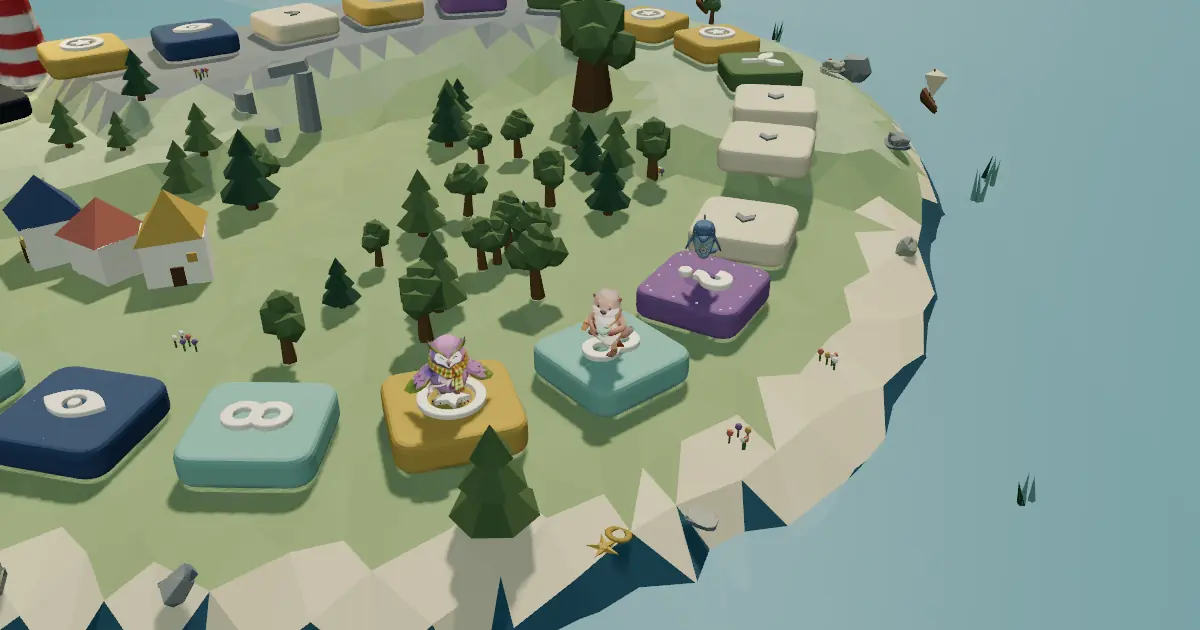
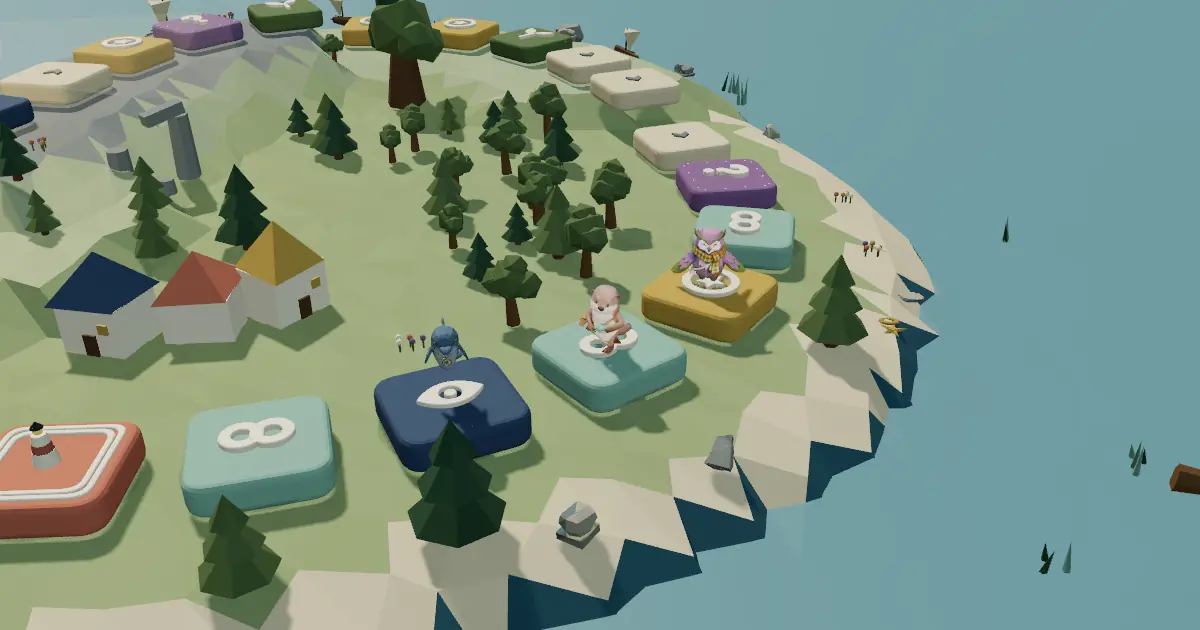
A visual language from day one
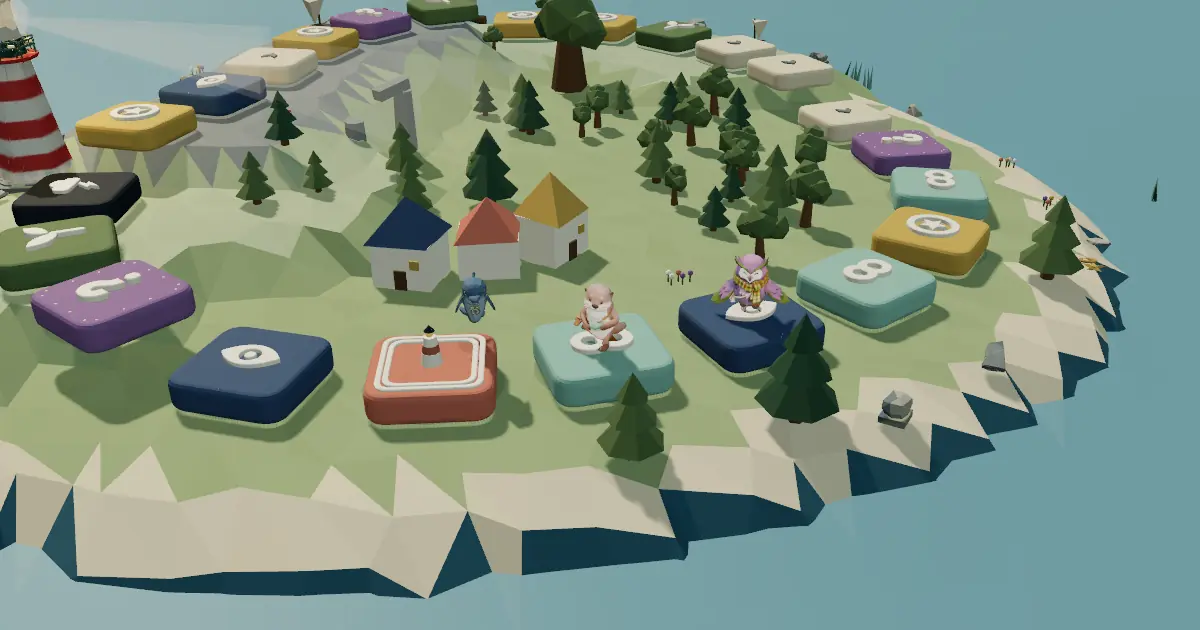
Before any code, the art direction was written down: a handcrafted island diorama where every roll feels like a quiet step through an inviting mystery. Whimsical, mysterious, friendly and quiet. Silhouette before detail, soft low-poly geometry, calm colour coding, and a fixed palette of sage, moss, seafoam, ochre, coral and deep ocean. That document outlived the board game and still governs every model on the island today.
Milestone 2
Pitching a second idea alongside it
While the board game was being finished, I kept wondering what it would feel like to stand on that island instead of looking down at it.
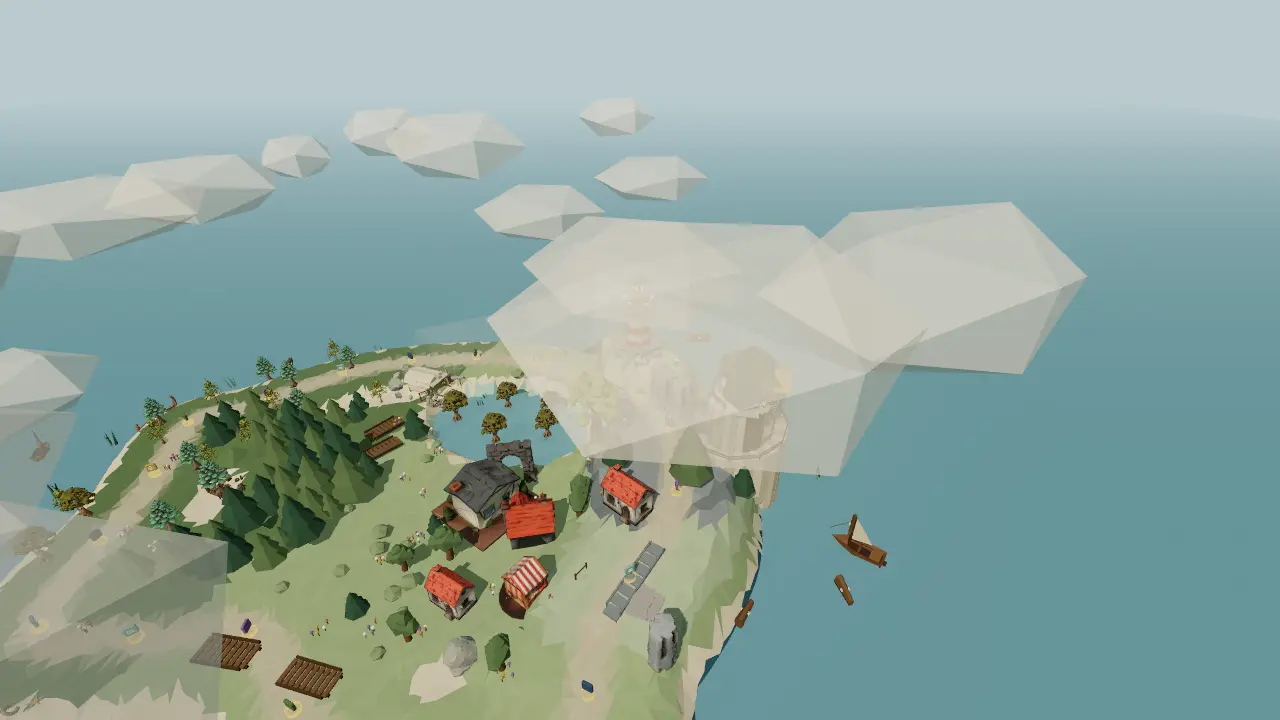
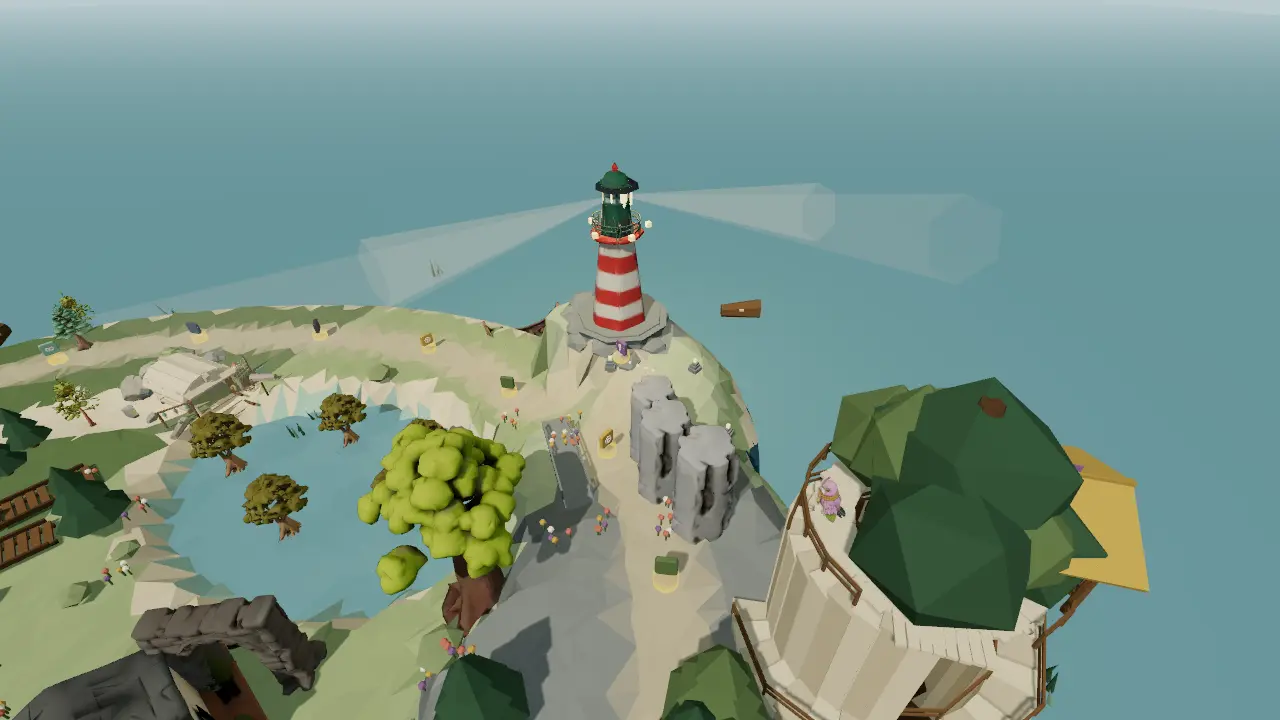
So I built a second prototype next to the shipping game, on its own URL so the board stayed untouched. Explore turned the board into a place. The island kept the same silhouette as the game board but was generated in code at walking scale. Quests replaced turns. Coin, Trust, Wisdom and Community changed through things you did in the world (salvaging the shore, preparing for weather, talking to neighbours) instead of cards you drew. Storms became timed events that scarred land you had already walked across.
It played with keyboard and mouse or a PlayStation controller, had a third-person camera with an optional first-person view, and gave each keeper a reason to talk to the others. Both versions went to the client side by side.
Milestone 3
The client picks the island
NationSwell played both and asked to go with the free-form version. That decision changed the scope of everything that followed.
A walkable game needs an island worth walking. The code-generated Ridge was replaced by an artist-authored island: a sculpted mesh, a matching heightfield for walking and swimming, and a world file that names every landmark, path and pickup. The game checks that those three agree every time it boots, so a map change can never leave a keeper floating or a tile under water.
Once the island was solid, it moved to the front door. The home page now opens straight onto the keeper picker. The board game moved to its own page as an archive, and old links redirect so nothing a tester had bookmarked broke.
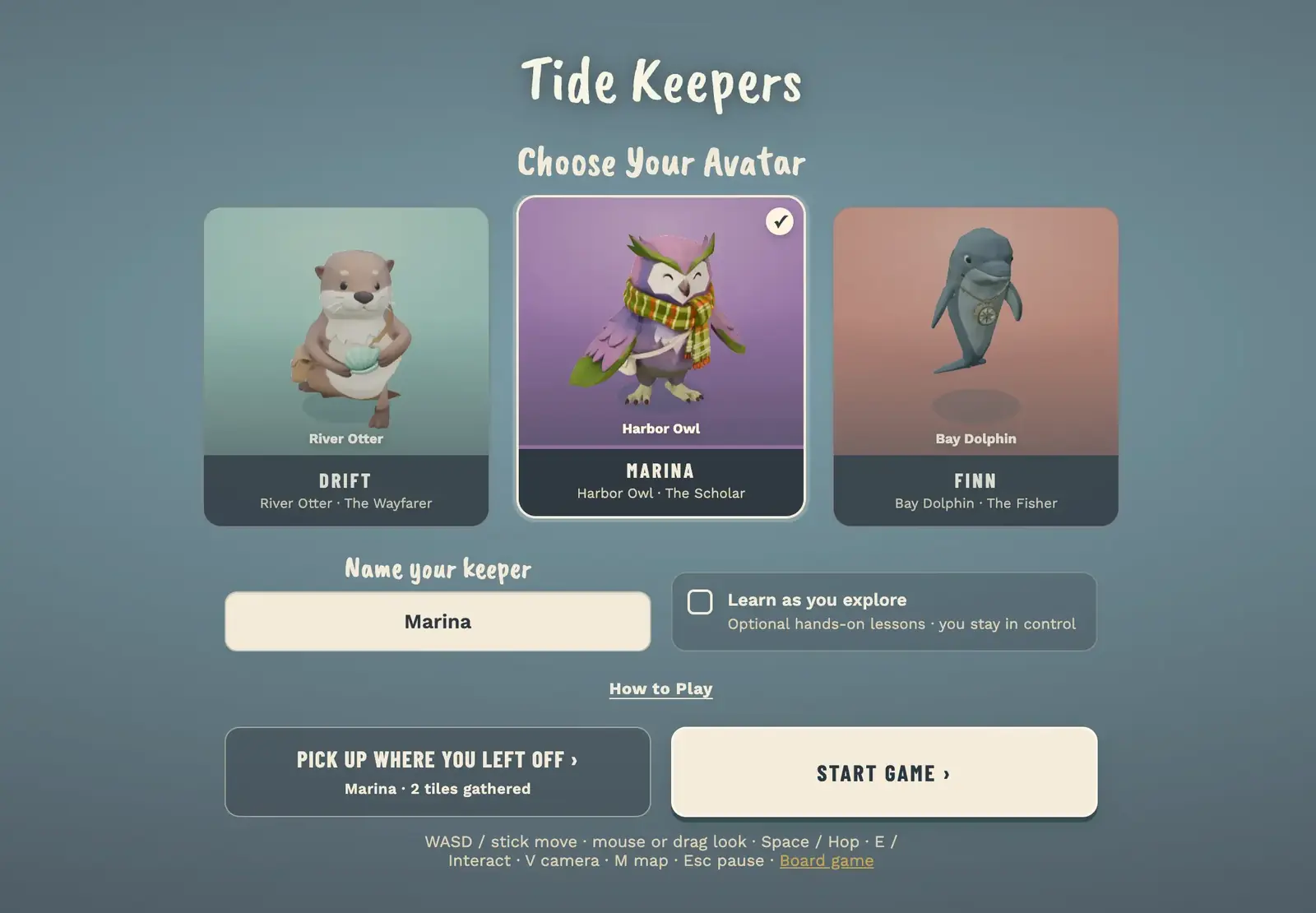
The question stopped being “what did you land on?” and became “where do you want to go?”
Milestone 4
Keepers, rigs and animation
On a board, a keeper only has to stand on a tile. On an island they have to walk, run, swim, fly, carry things and react, at a size that still loads on a phone.
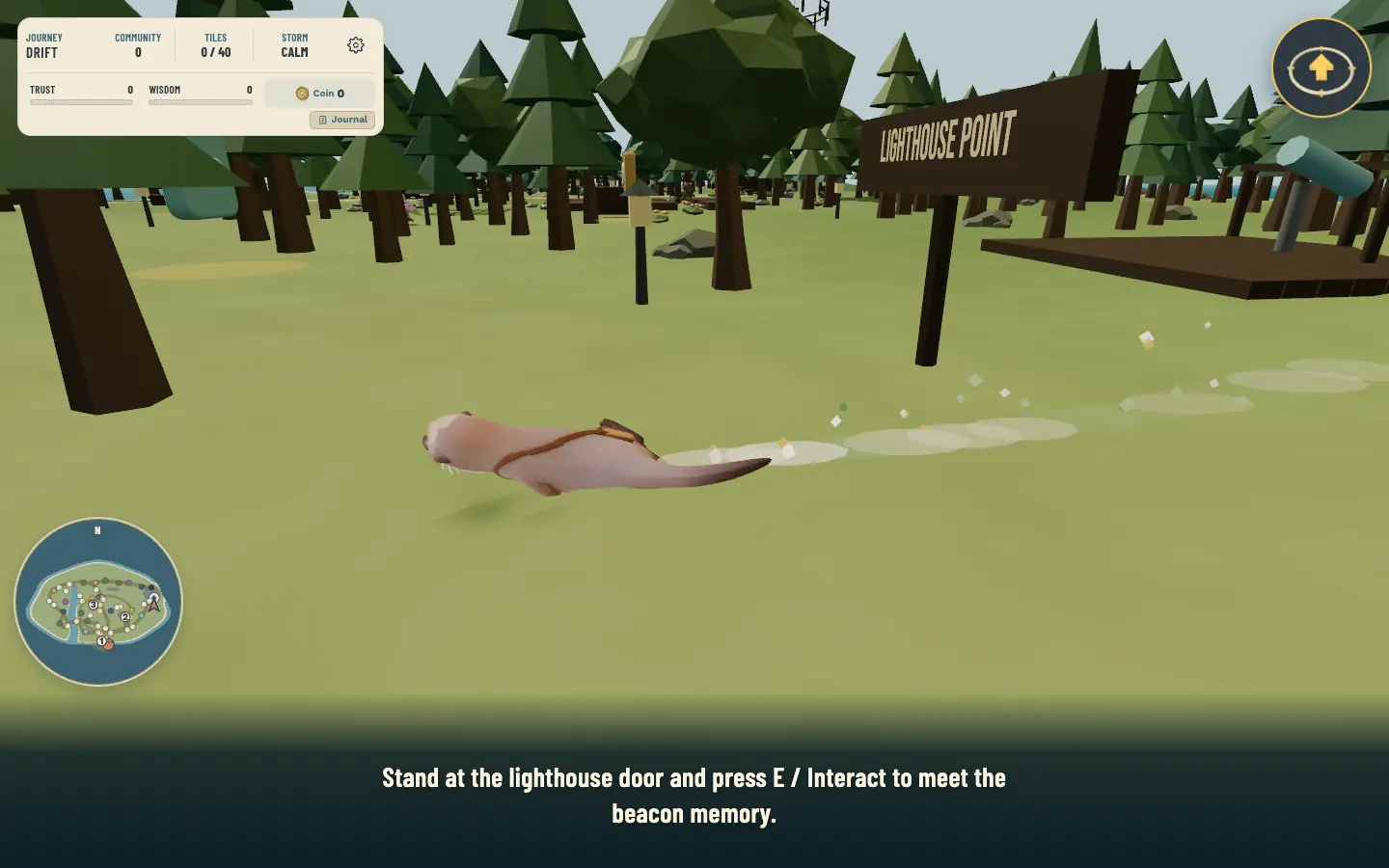
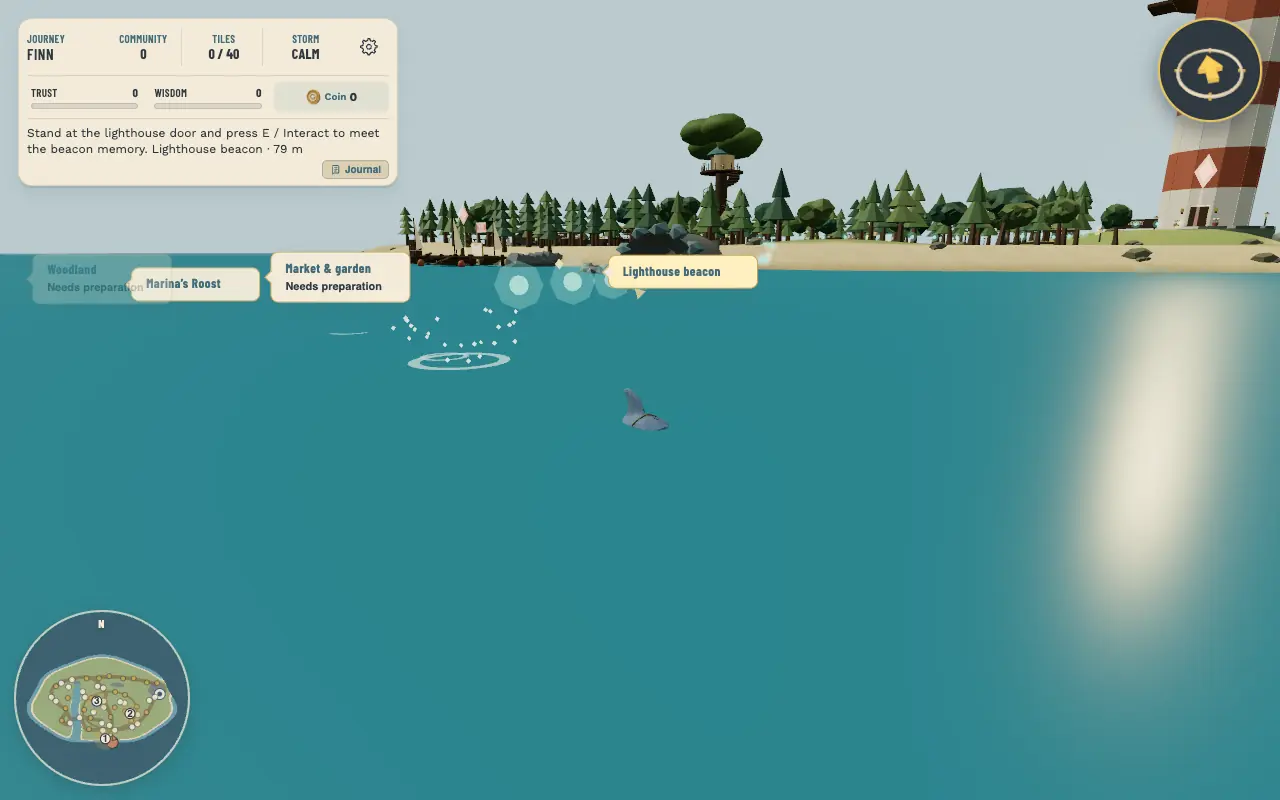
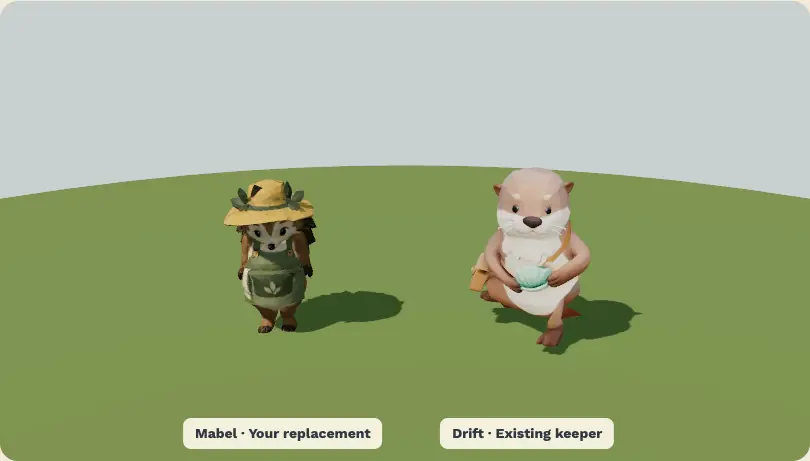
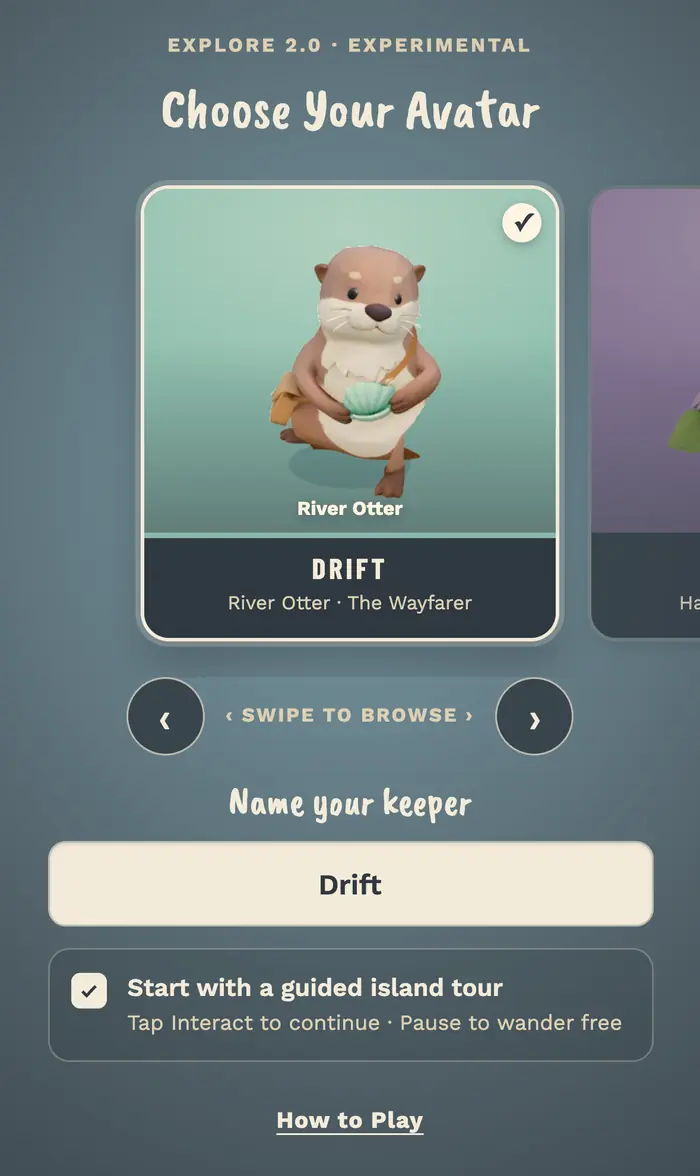
There are three playable keepers, and each one moves differently on purpose. Drift the otter bounds and slides. Marina the owl flies. Finn the dolphin swims. Their abilities are the reason to pick one over another, so each needed its own animation set and its own camera behaviour.
Rigging
Each keeper arrived as a sculpted model and went through its own pipeline. Finn was auto-rigged, then his idle, walk and swim clips were written as code that drives his bone chains directly, so timing could be tuned like any other game value. Two bones in his snout were frozen after testing showed his face wobbling during idle. Drift and Marina came in with idle, walk and run clips that were kept intact while everything around them was rebuilt.
Making them fit on a phone
The source files were far too heavy for a browser game. Every keeper went through mesh simplification, compressed textures and Draco geometry compression, checked at gameplay camera distance where silhouette and motion matter more than micro-detail.
- 14 MB → 727 KB
- Marina the owl, clips preserved
- 435k → 105k
- triangles on Drift, now about 948 KB
- ~722 KB
- Finn with idle, walk and swim
Animation that reads as the character
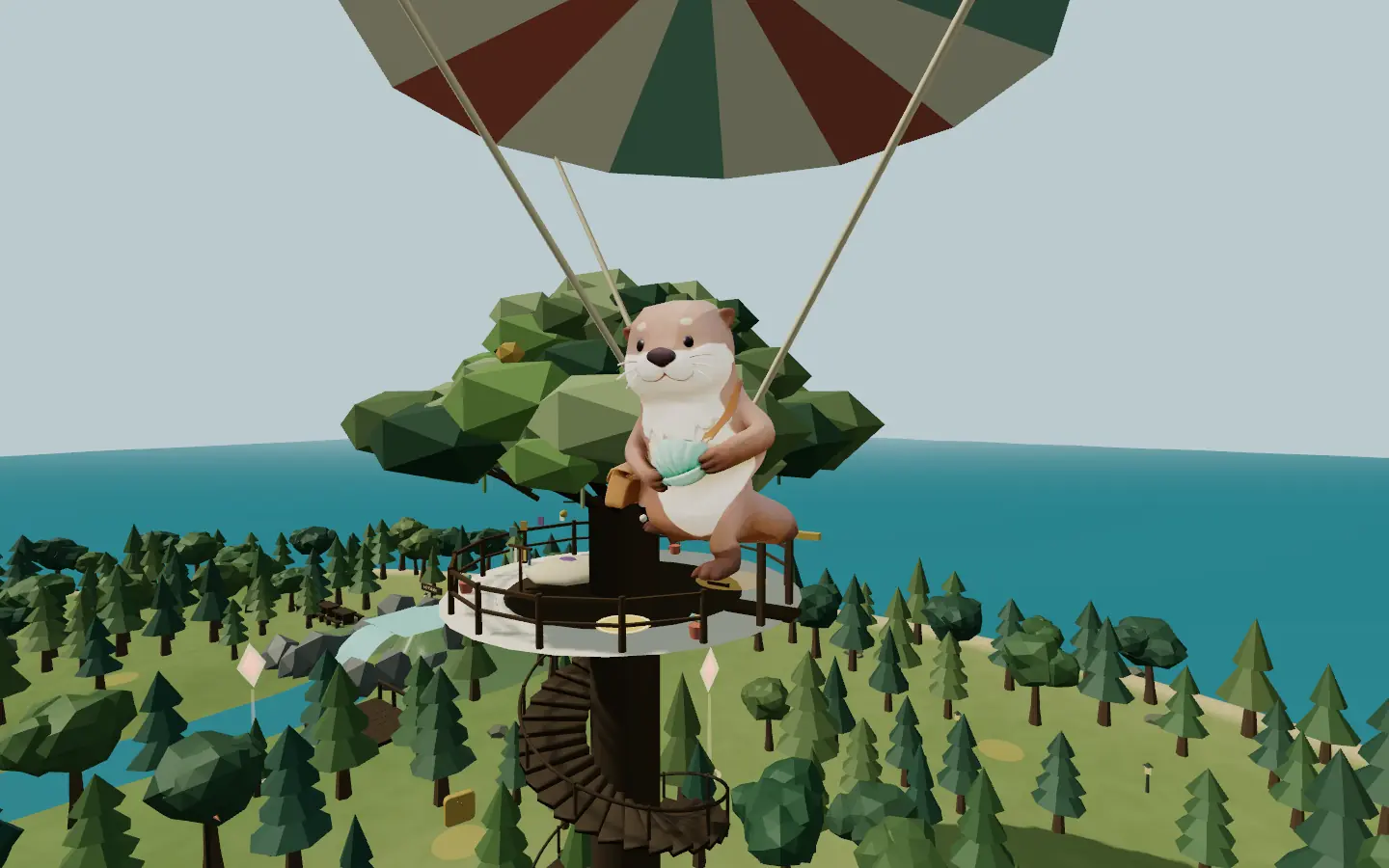
Animation kept getting refined as play revealed problems. Drift’s sprint used to shear his body, so it was rebuilt. A borrowed parachute pack sits on his back for jumps from height, and holding Space while moving drops him into a grassy belly-slide with a rustle. Marina can launch from the lighthouse balcony, glide across the bay and land on the lantern at the very top. Finn got a natural dive-and-surface rhythm instead of skimming flat.
A supporting cast
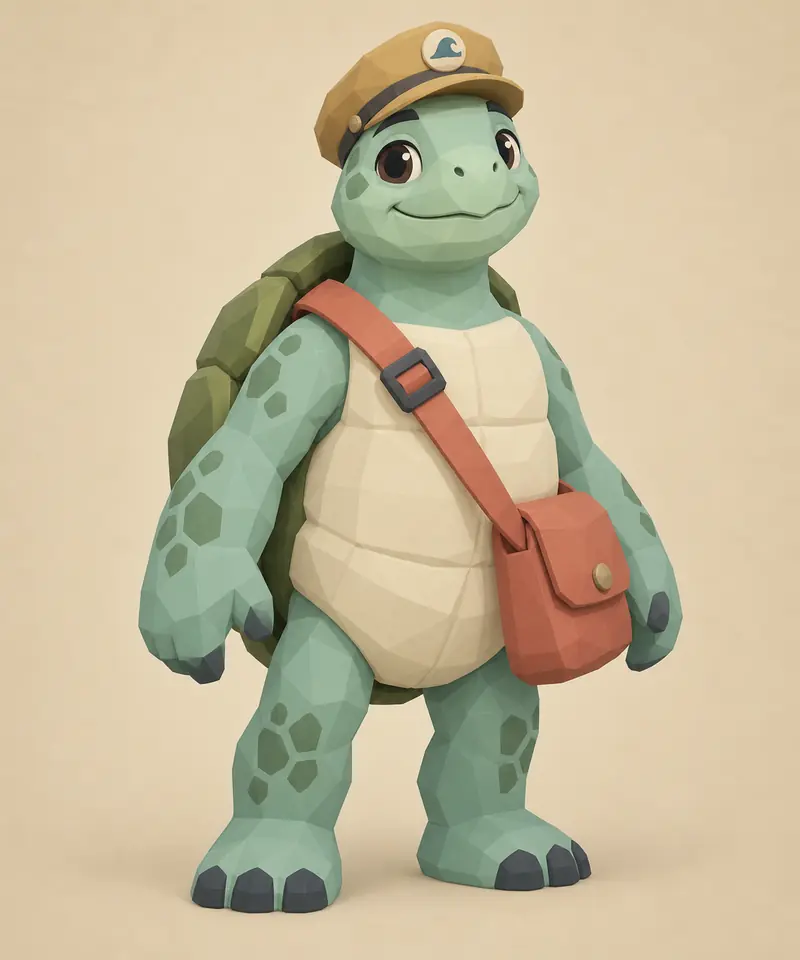
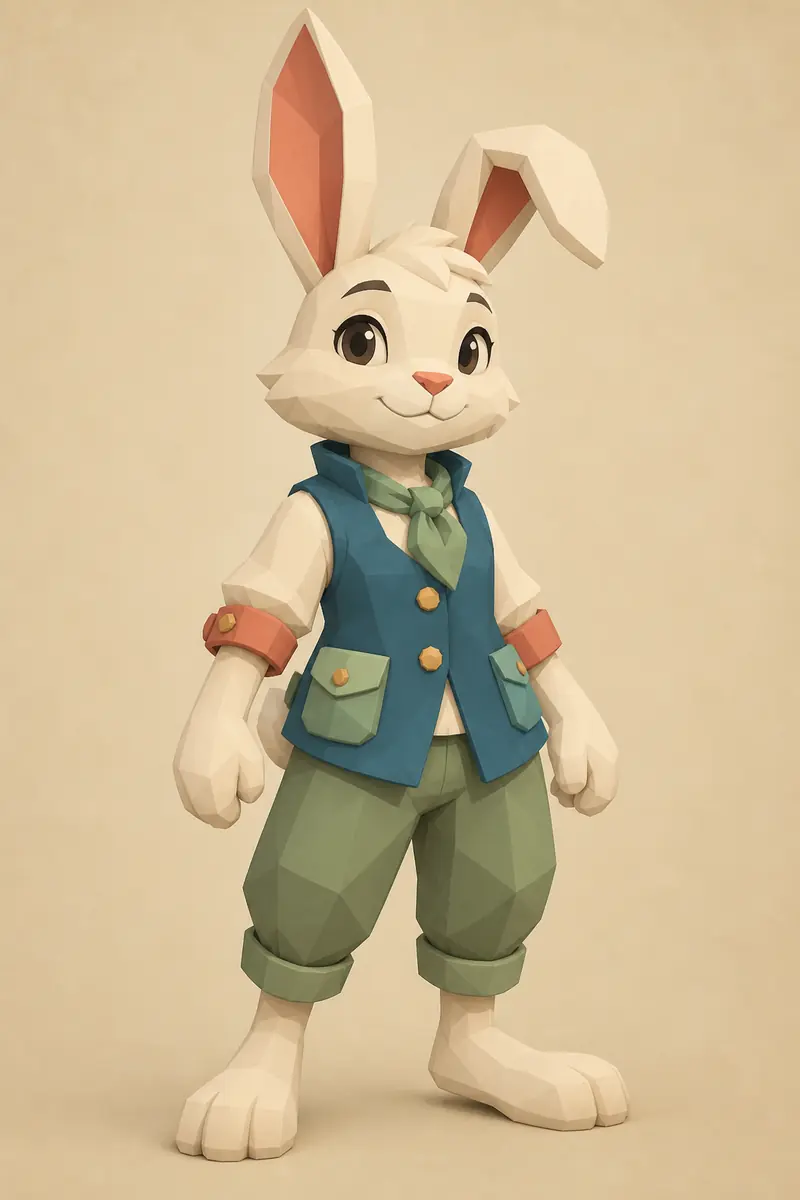
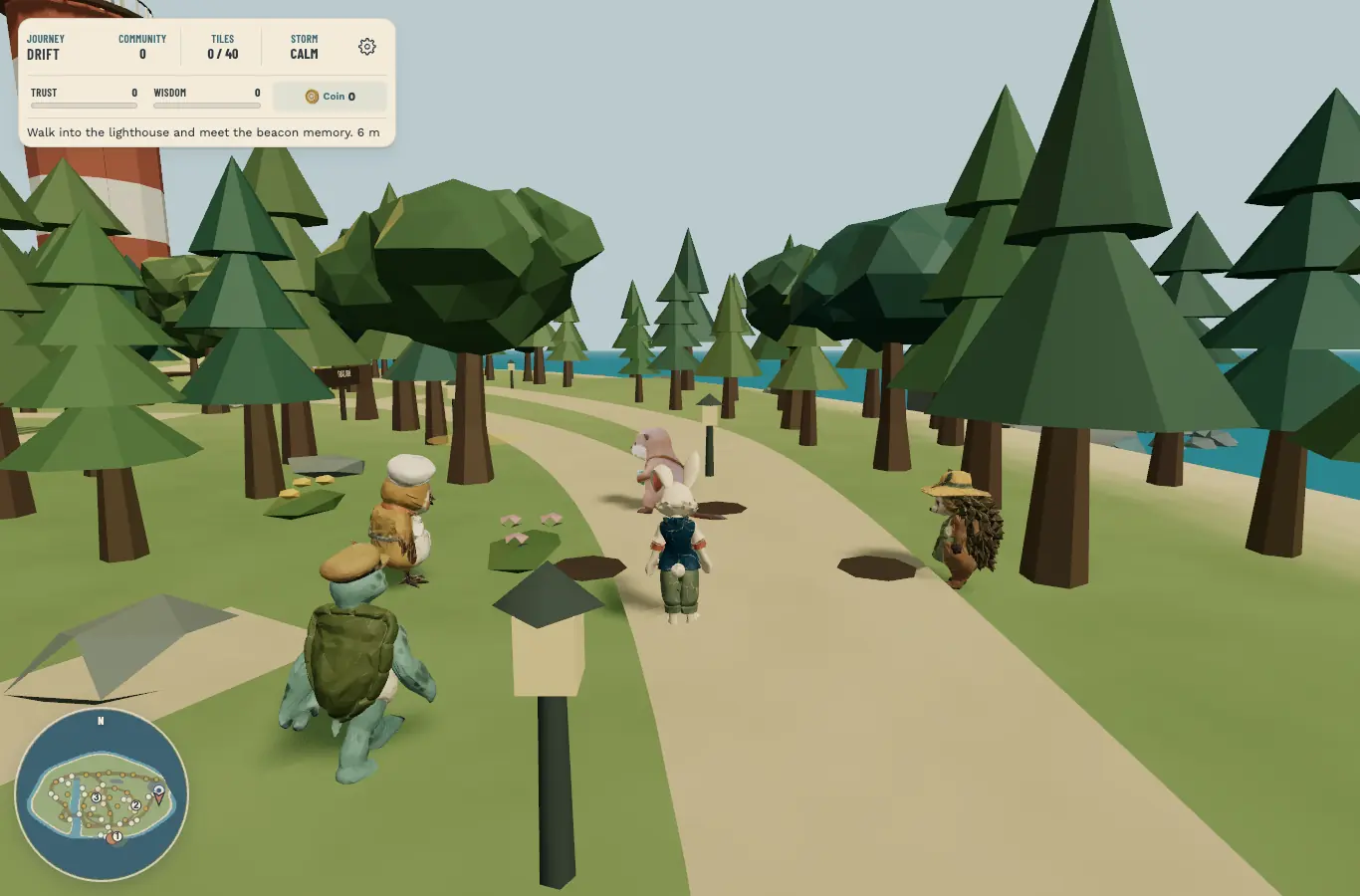
The market needed neighbours, not more playable heroes. Four regulars were designed as illustrated concepts first: Pip the sparrow baker, Mabel the hedgehog gardener, Shelly the turtle courier and Juniper the rabbit mender. Each has one defining accessory and a job tied to a lesson in the game. A first batch generated from text prompts came back off-model, so the cast was rebuilt from the approved concepts as reference, posed for rigging, with their own animation sets, and optimised to a few thousand triangles each.


Milestone 5
Building the world
The island had to reward wandering. Every region got a landmark you could see from a distance and a reason to walk over to it.
Props were generated in batches against a single style brief pasted into every job: a handcrafted tabletop miniature, chunky faceted geometry, matte clay only, no gloss or photoreal grain, silhouettes exaggerated so they read from the camera. Every model was then cleaned, compressed and checked on the island itself.
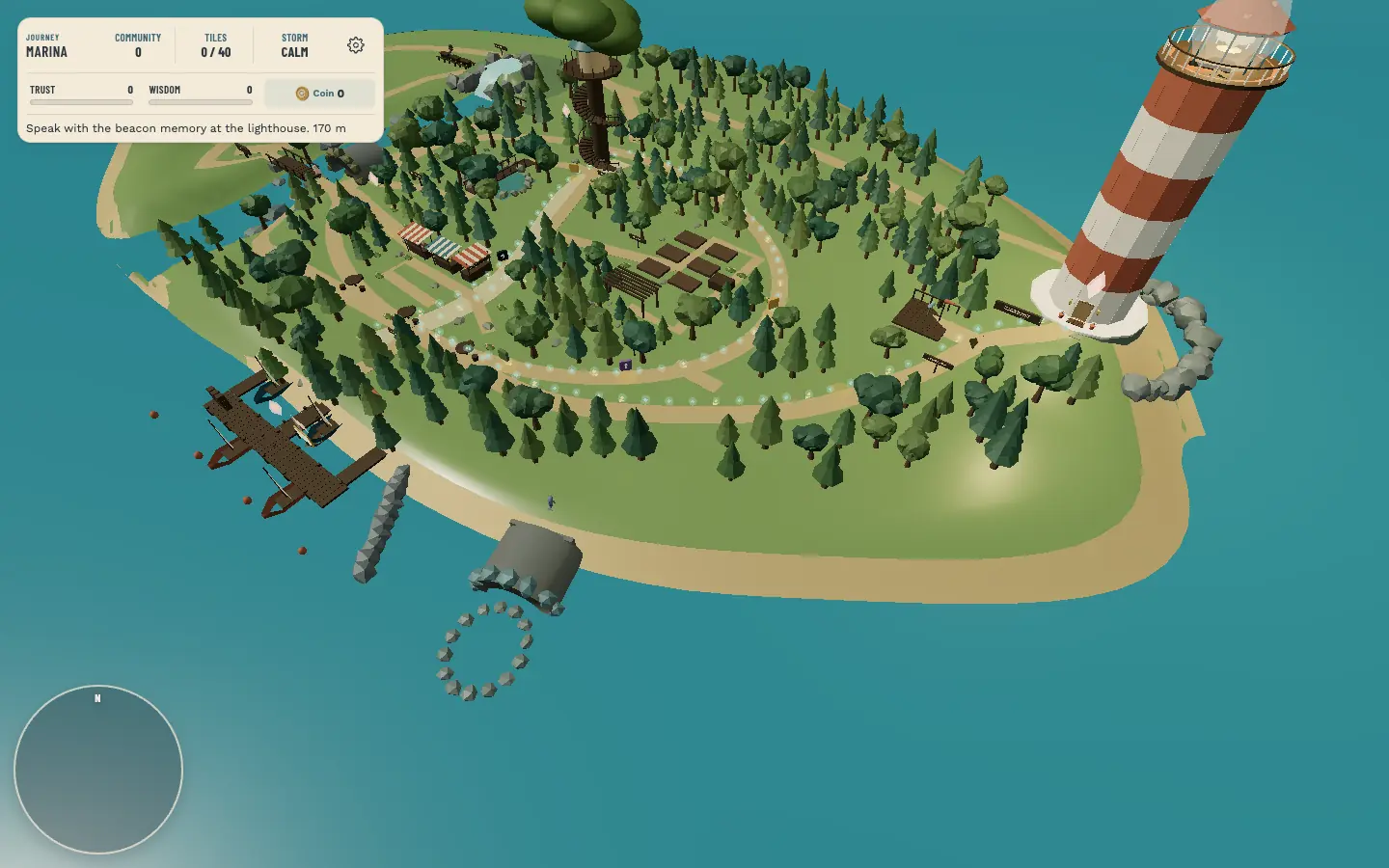
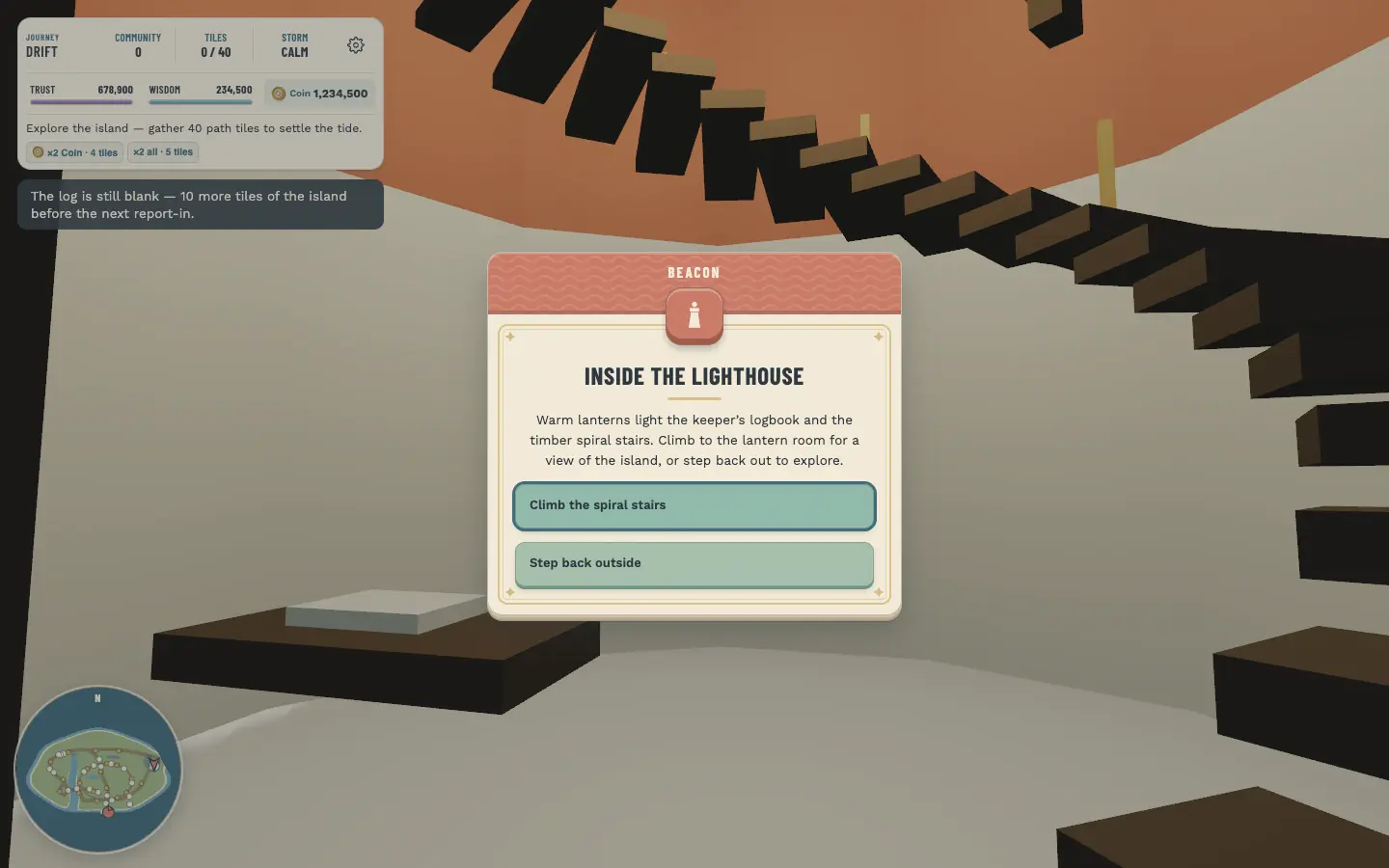
- The lighthouse is the anchor. You can walk inside, climb a spiral stair under a fixed camera and step out onto the balcony.
- Marina’s Roost is a tall treehouse with a spiral stair, wind ribbons that chime and a swing that faces out over the island.
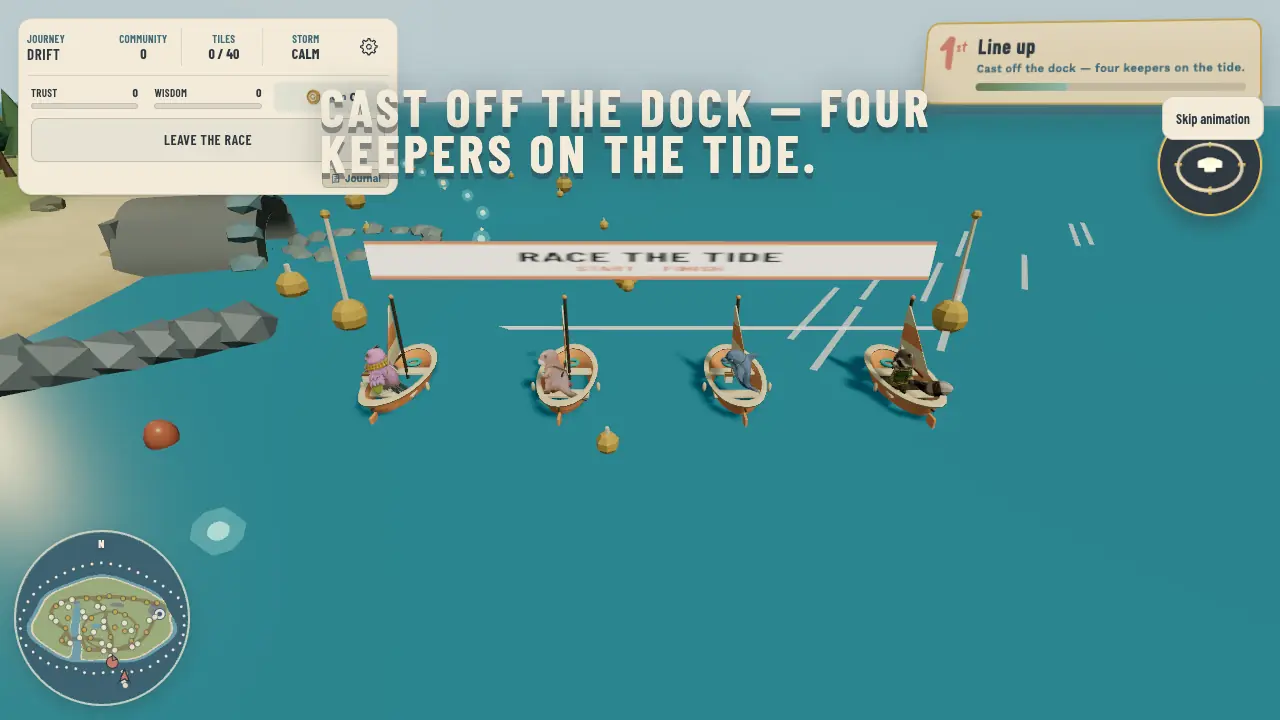
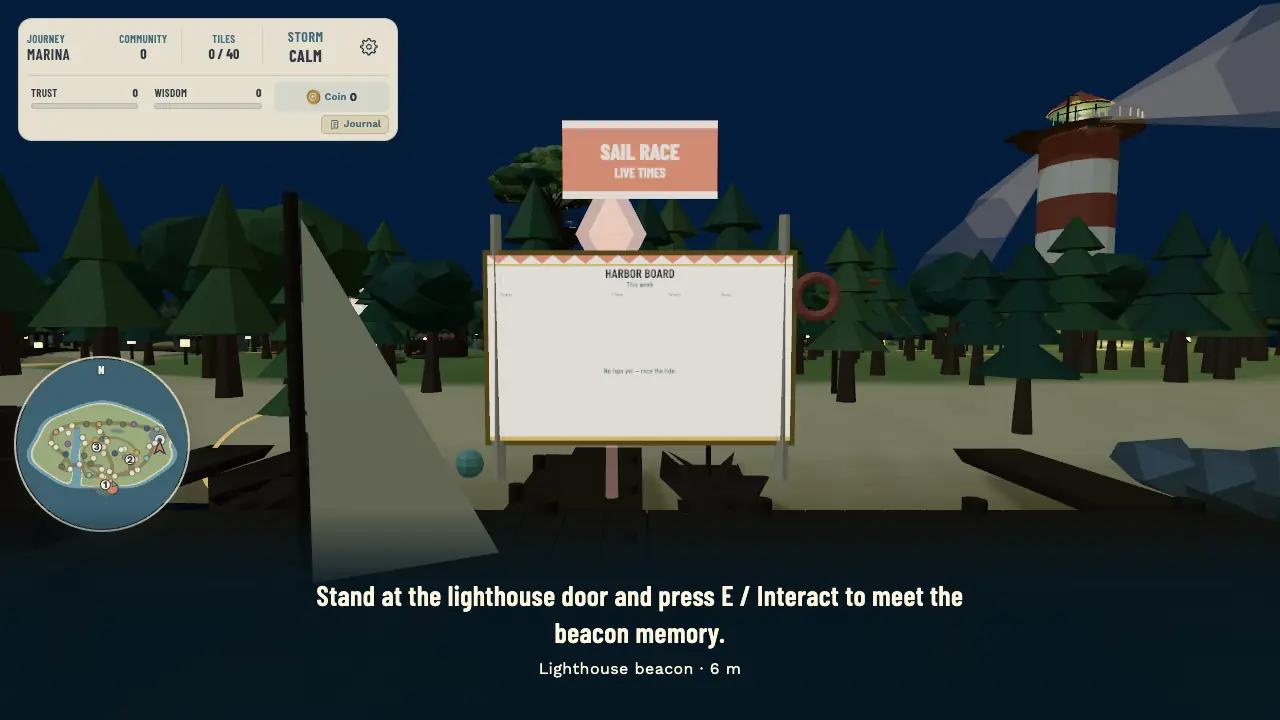
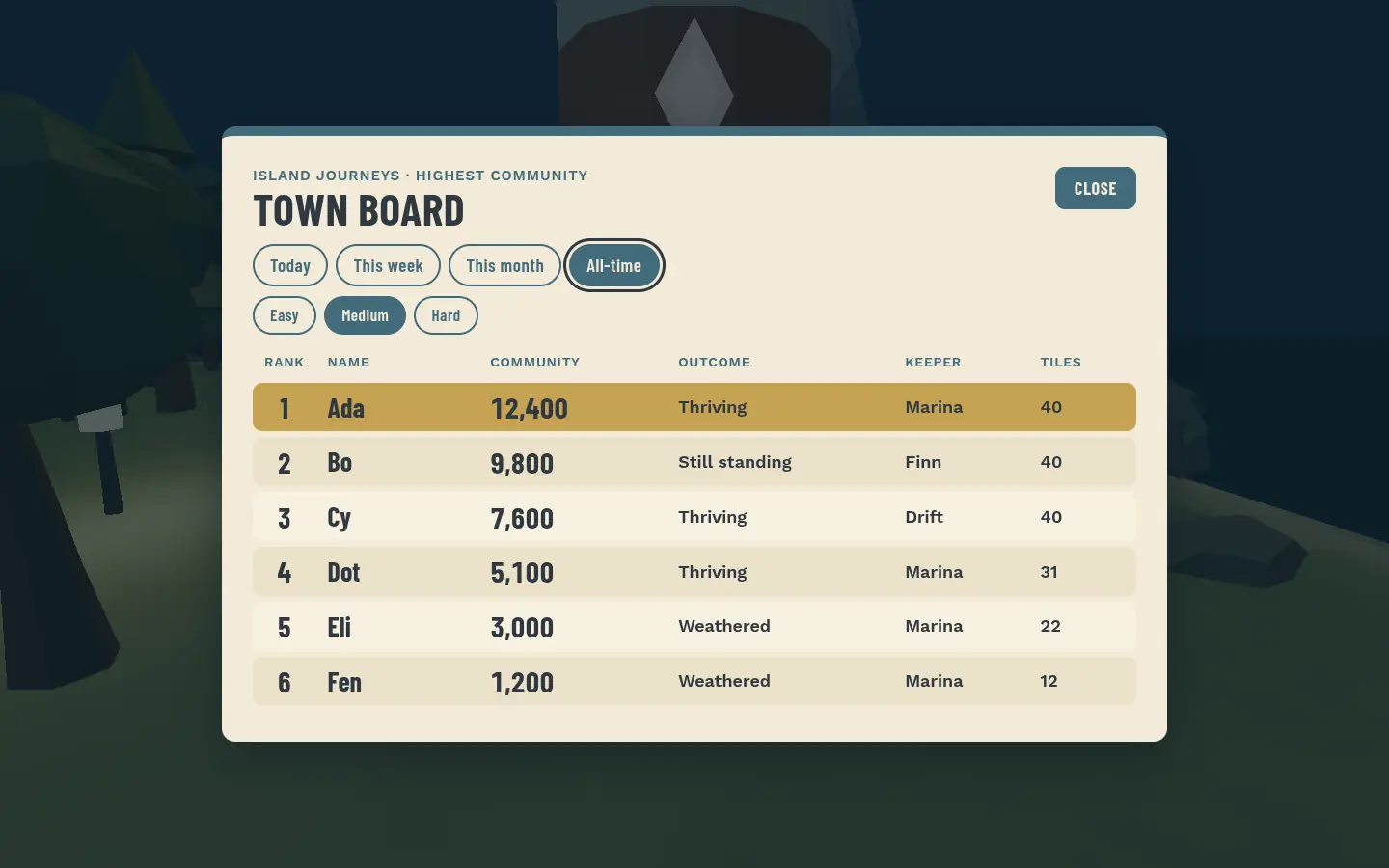
- The harbour runs a sail race along the coast against animated boats, with live standings on boards at the pier and in town.
- Willow Falls, the river and the bridge split the island so the walk has a shape.
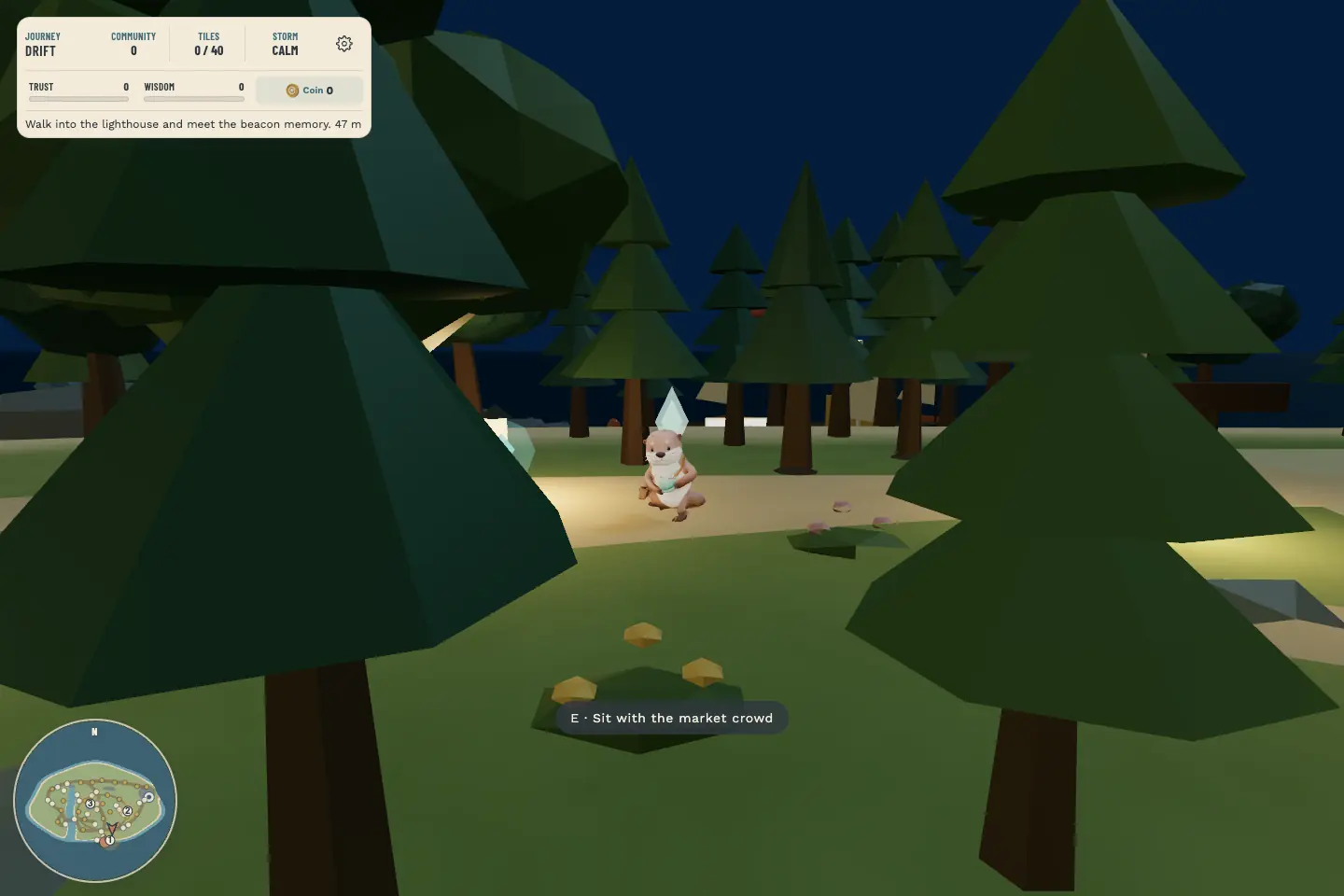
- Day and night follow a gentle cycle, with lanterns that light up near your keeper.
Weather you can watch
Storms are the emotional centre of the game. Clouds gather over the lighthouse, wind strips the forest, and a surge floods the meadows you walked a minute ago. Then the island settles and the damage stays until someone repairs it. The intensity scales with difficulty: on Easy, the first storm wrecks the whole island so new players see the full arc early.
Sound
All of the sound was generated and then curated: one-shot effects for every interaction, a library of island themes that rotate as you play, three tiers of storm music that match the damage level, aftermath beds for a scarred island, and short voice lines for the keepers. Music ducks into the storm and back out again, so the audio follows the weather.
Milestone 6
Interactivity: choices you can see
The board game’s cards survived the move to 3D. What changed is that their consequences now stand on the island in front of you.
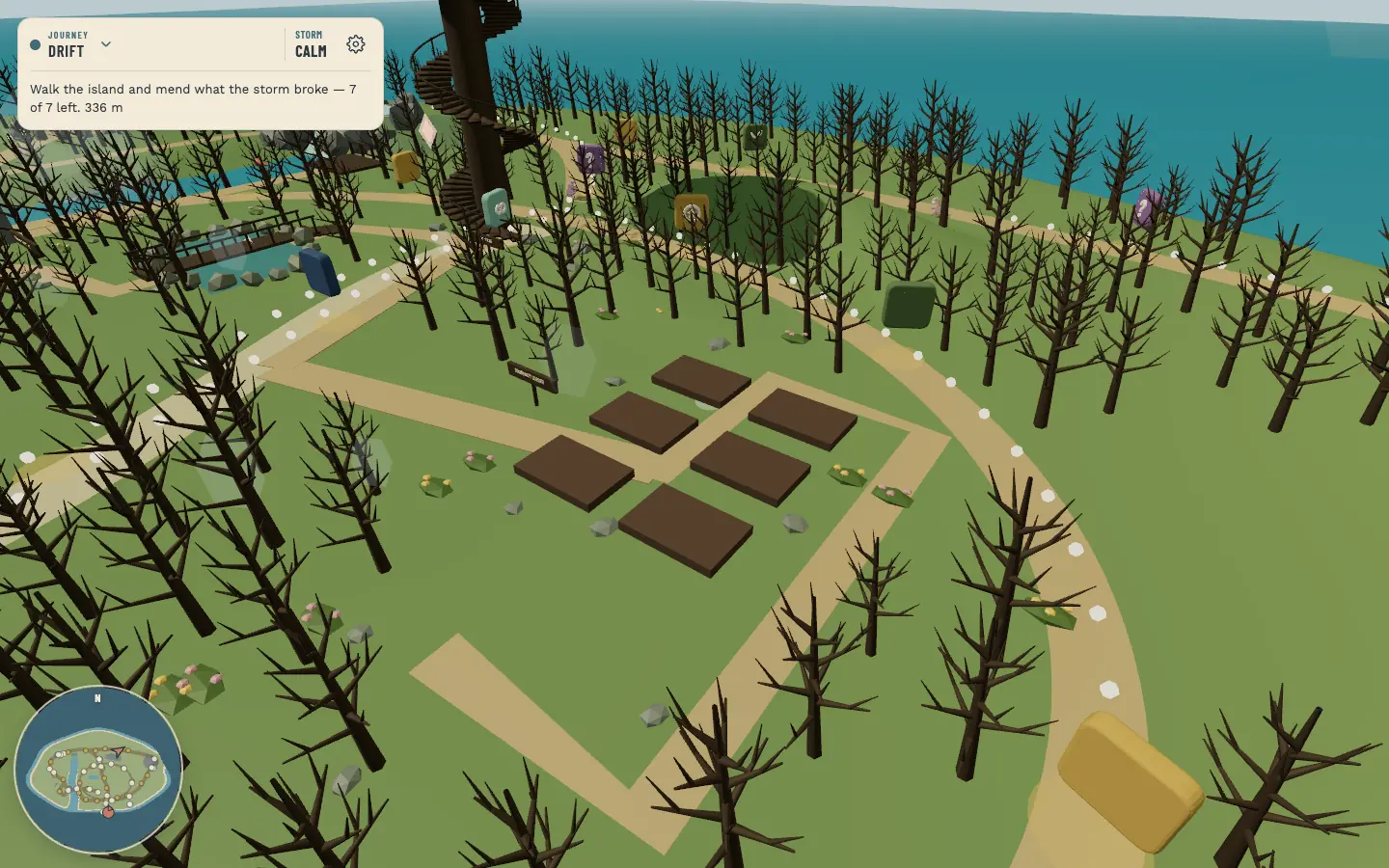
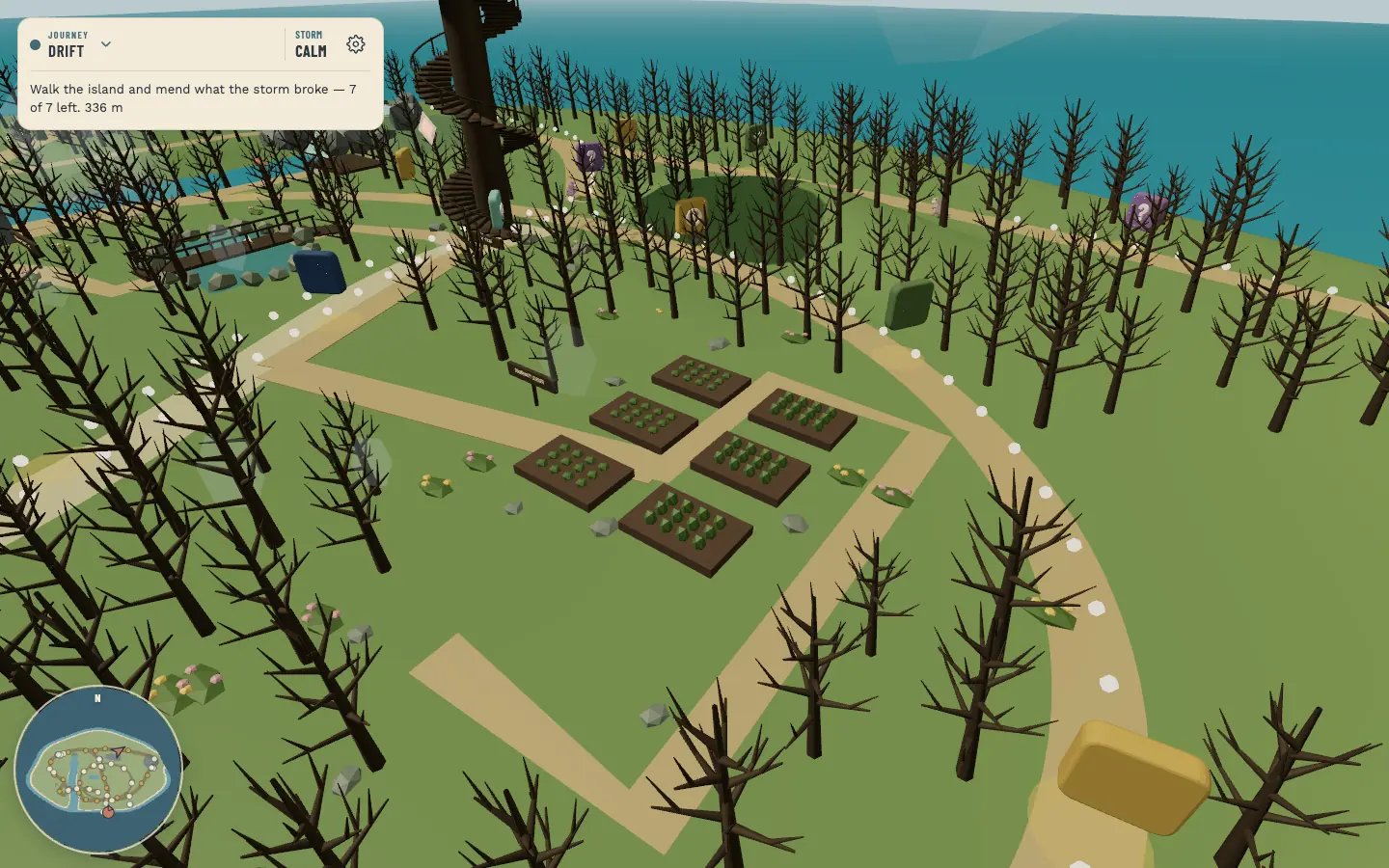
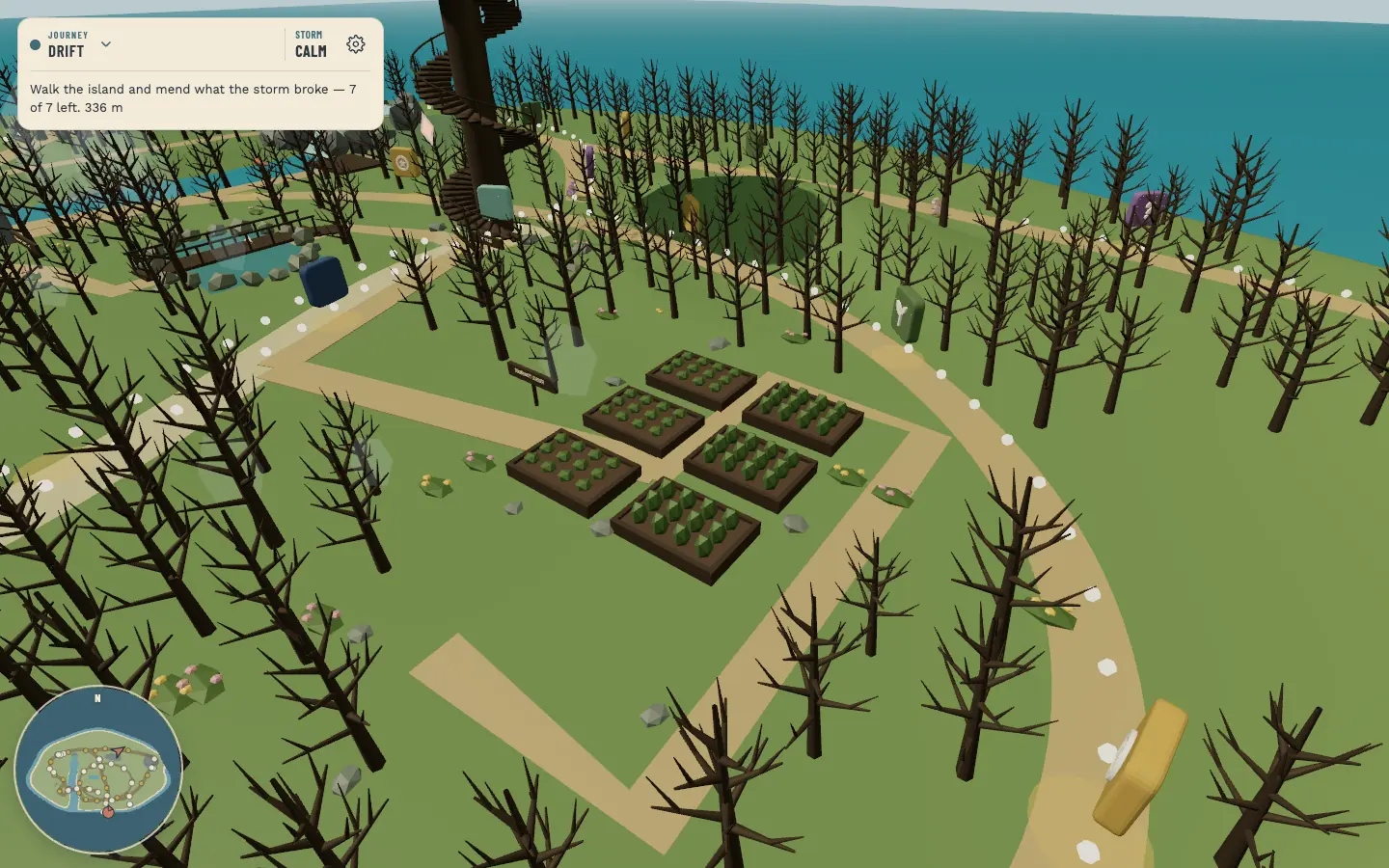
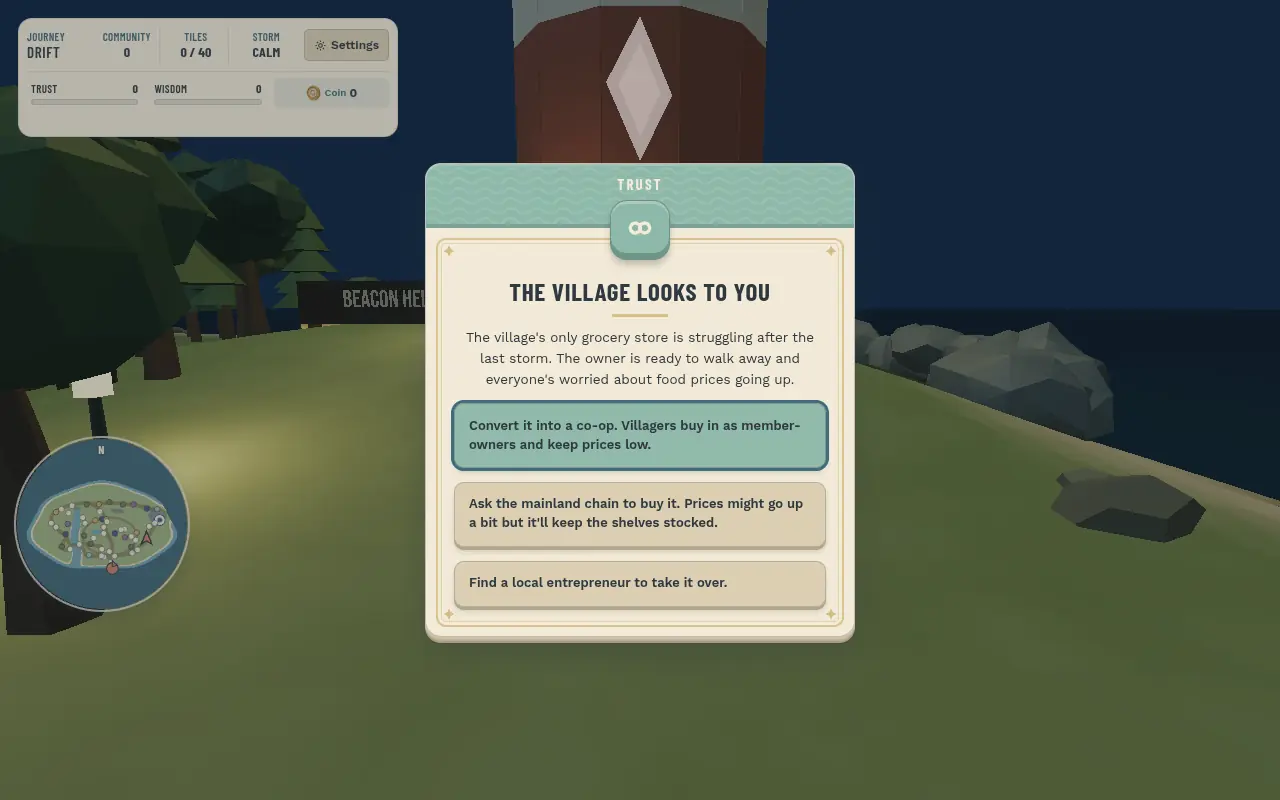
The goal is simple: collect the 40 path tiles. Walk onto one and its card opens. Each card is a small dilemma for your village, and your answer moves Community, Trust, Wisdom and Coin. Civic choices grow the island: a soup kitchen, a library wing, a community garden or a market stall appears on its pad with its own reveal shot. When a storm hits, those same buildings take damage, and repairing them costs coin you may or may not have saved.
Testing changed the game
The island looked finished long before it was understood. In the second round of user testing, none of the five testers could say what the goal was. They wandered happily and never found the point.
- 0 of 5
- testers understood the goal in round two
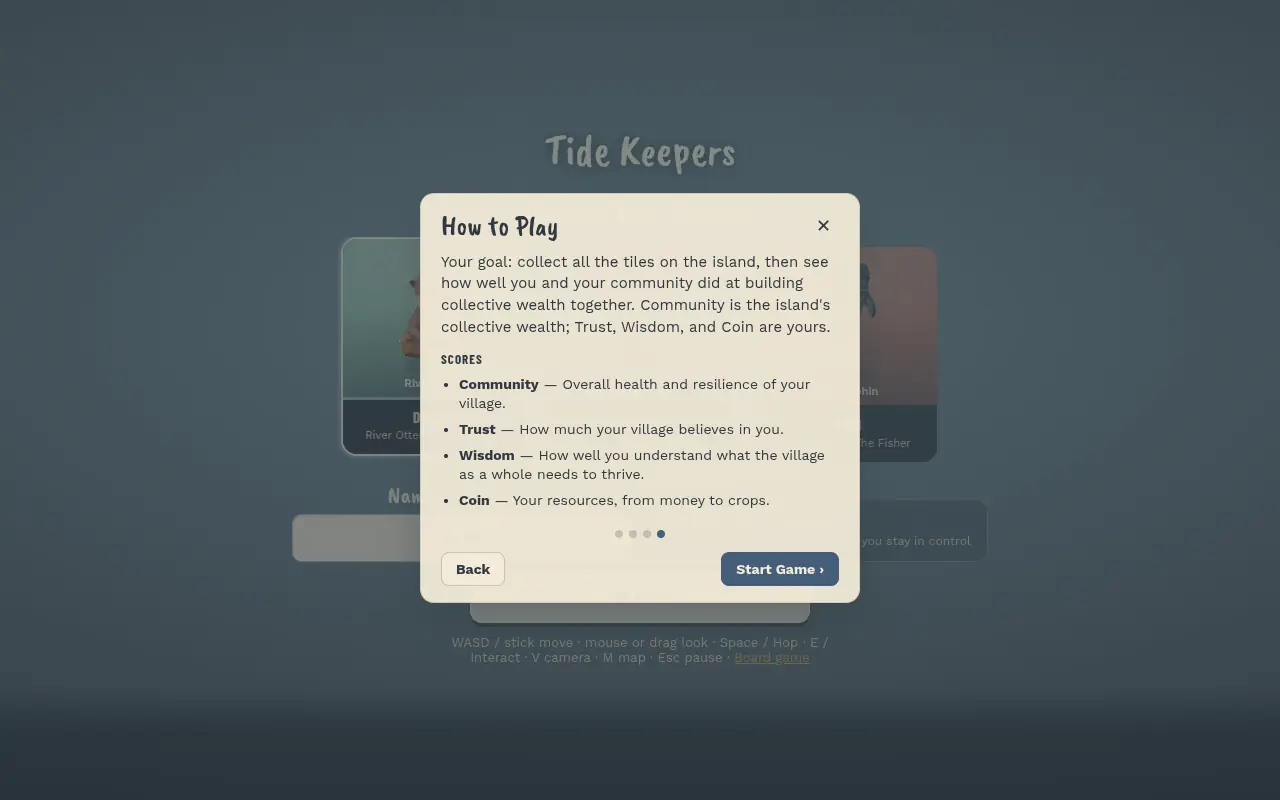
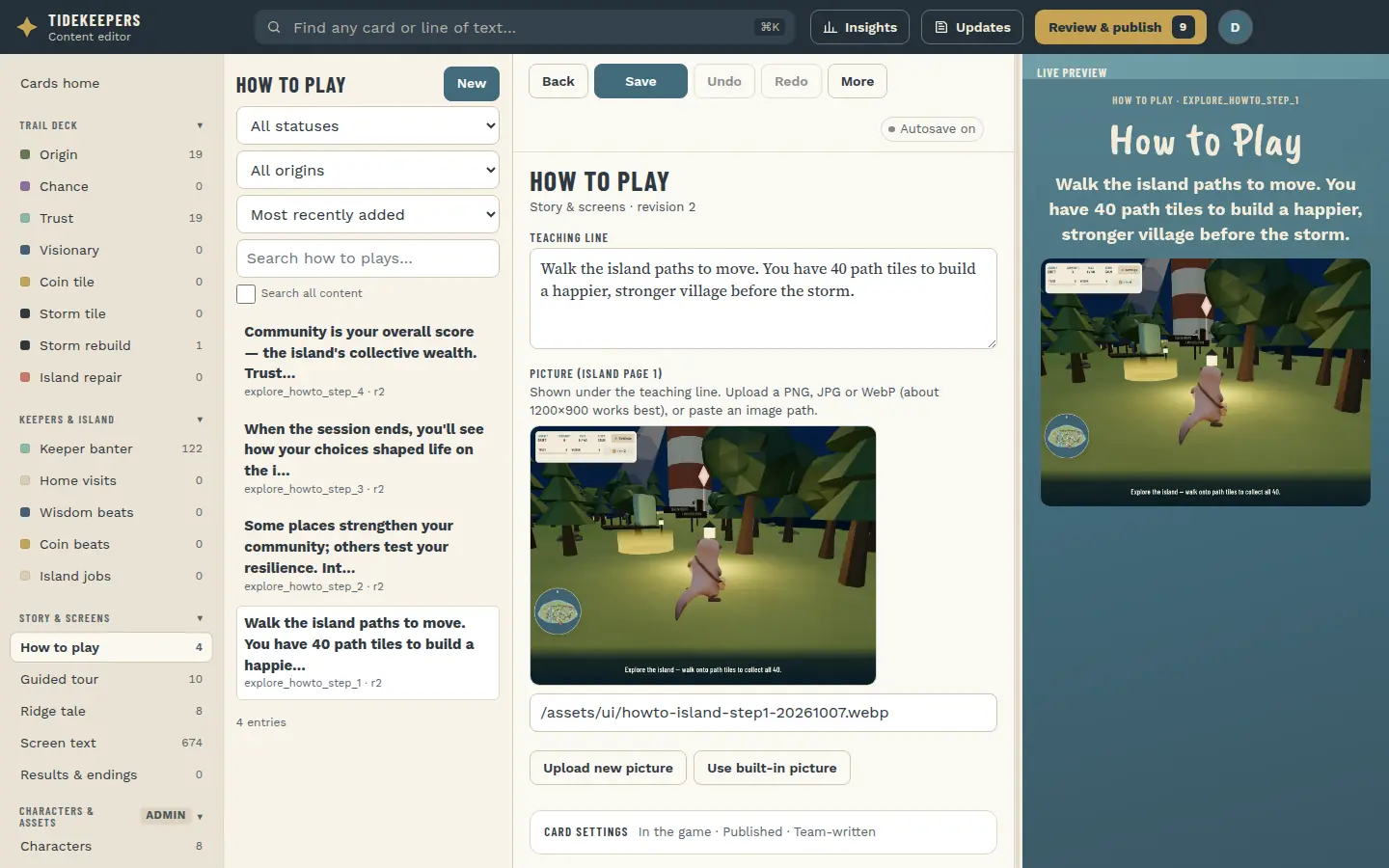
The fix was mostly subtraction. Every new game now opens with a four-page How to Play that states the goal plainly. An opening lighthouse quest was cut so players land straight on the tiles. Tiles open when you walk onto them, with no button press. A cryptic journal icon became a labelled Settings button, and point totals were hidden on the cards so people answered the question instead of doing maths.
Built for the phone in your pocket
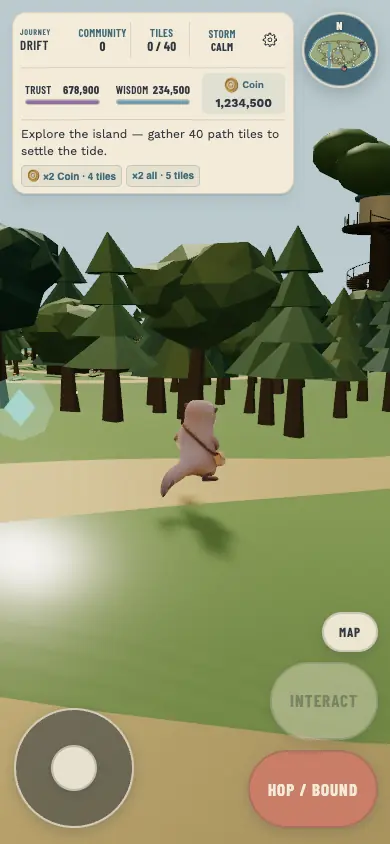
Most players arrive on a phone. Touch controls (a stick plus Interact and Hop buttons) sit above the message band, hints name only the controls your device actually has, and a phone can even become a gamepad for a bigger screen by scanning a QR code. Large bottom messages, adjustable text size, reduced motion and high contrast live in Settings.
Closing the loop with the client
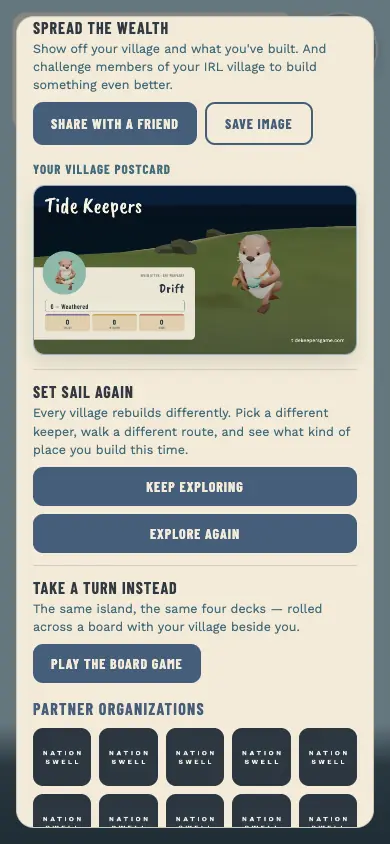
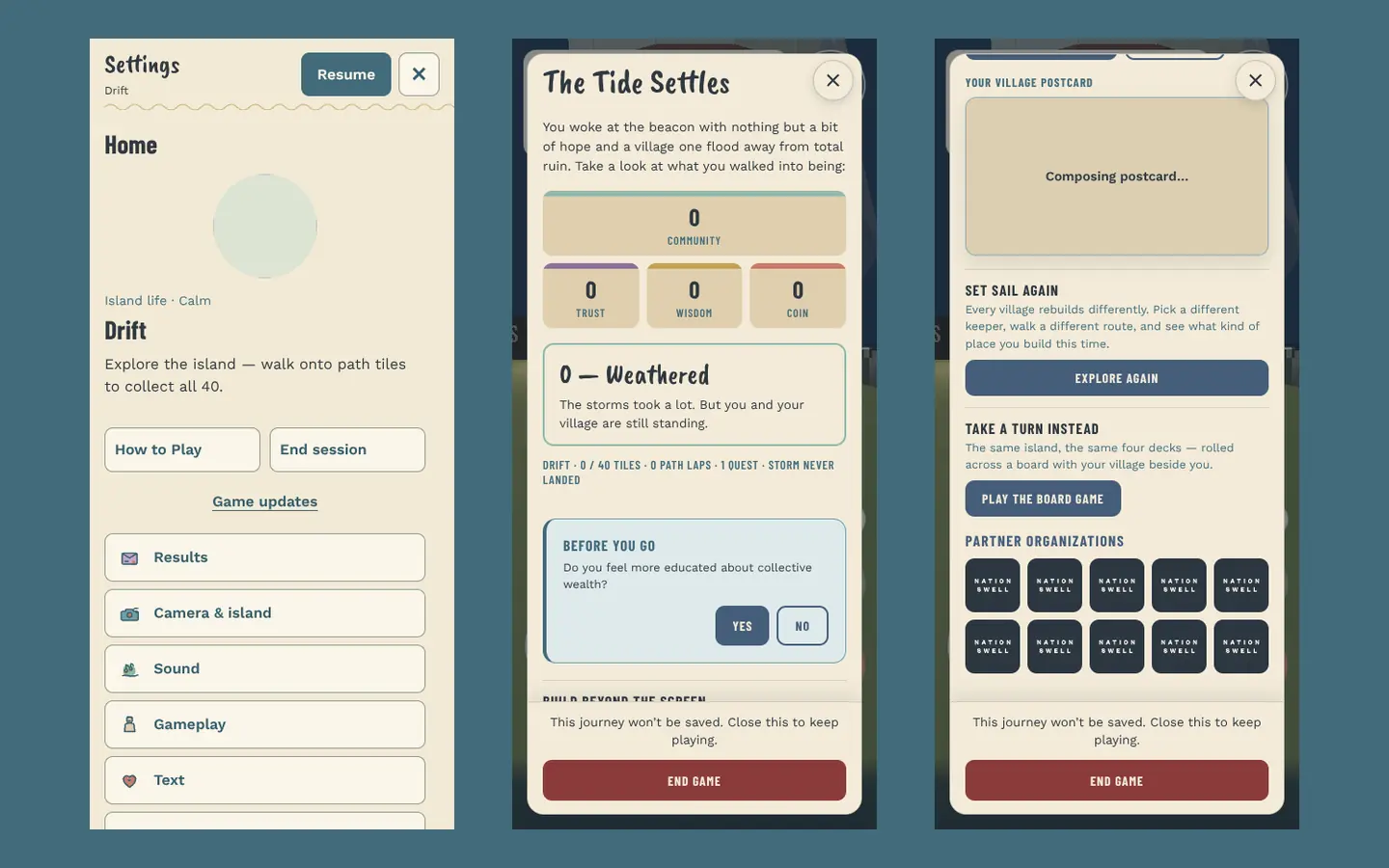
Feedback arrived as annotated mockups from the agency. One round pointed out that players who quit early never reached the end-of-game survey or NationSwell’s partners. Ending a game now always opens the results first, with the Before You Go question and the partner logos, and an X to keep playing. Tapping the score bar on a phone opens the same results, and How to Play became swipeable.
Milestone 7
A CMS so the client never waits on a developer
A game about a living village needs words that can change: card questions, keeper conversations, how-to steps, results copy, partner logos. The client’s team had to own all of it.
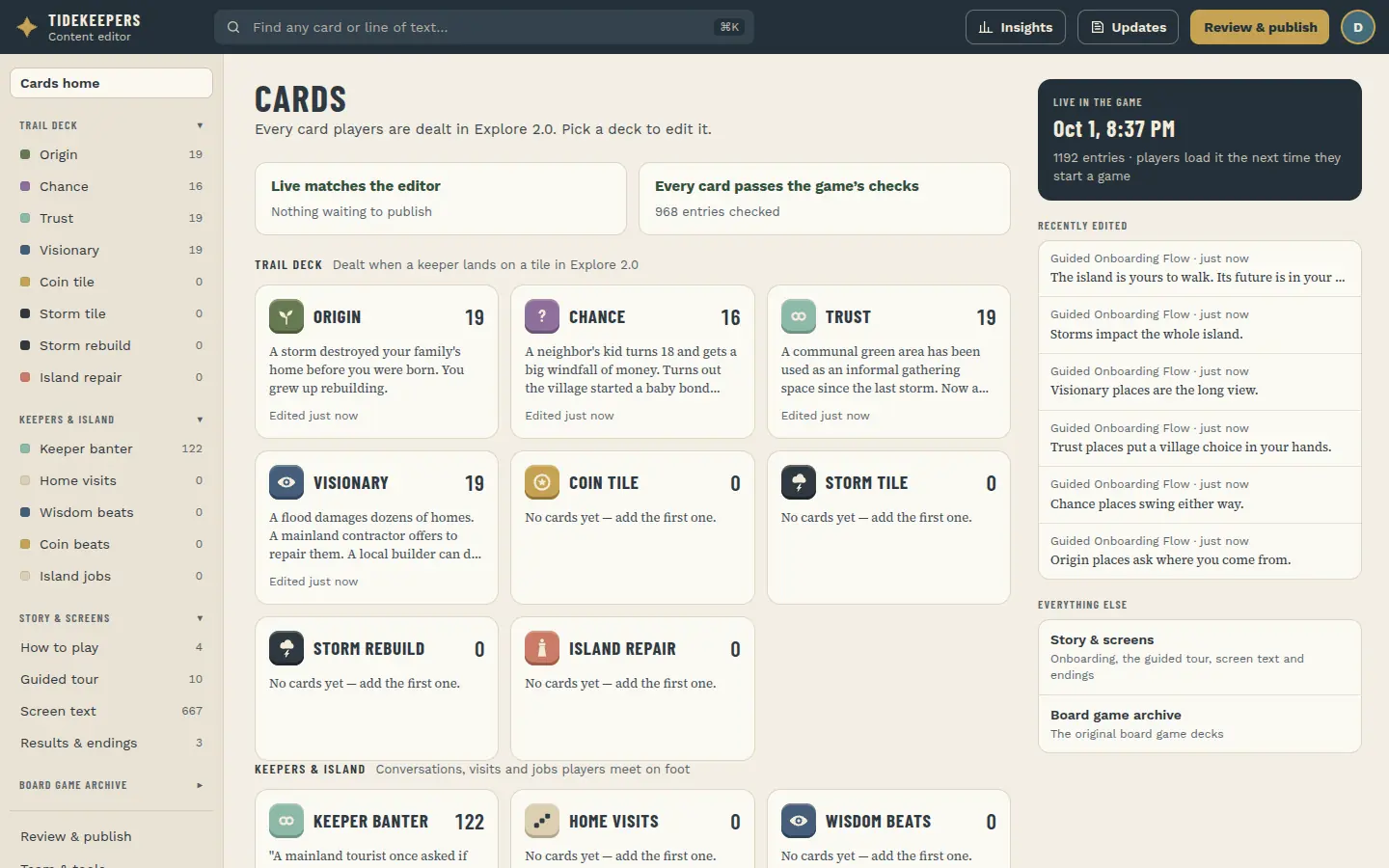
The content system grew with the game. It began in the board-game days as a simple editor with search and restore points, and gained an audio library, a results-screen editor with a live preview, roles and publish protection along the way. When the island became the product, I rebuilt it around how editors actually think: cards first.
Edit with the real card beside you
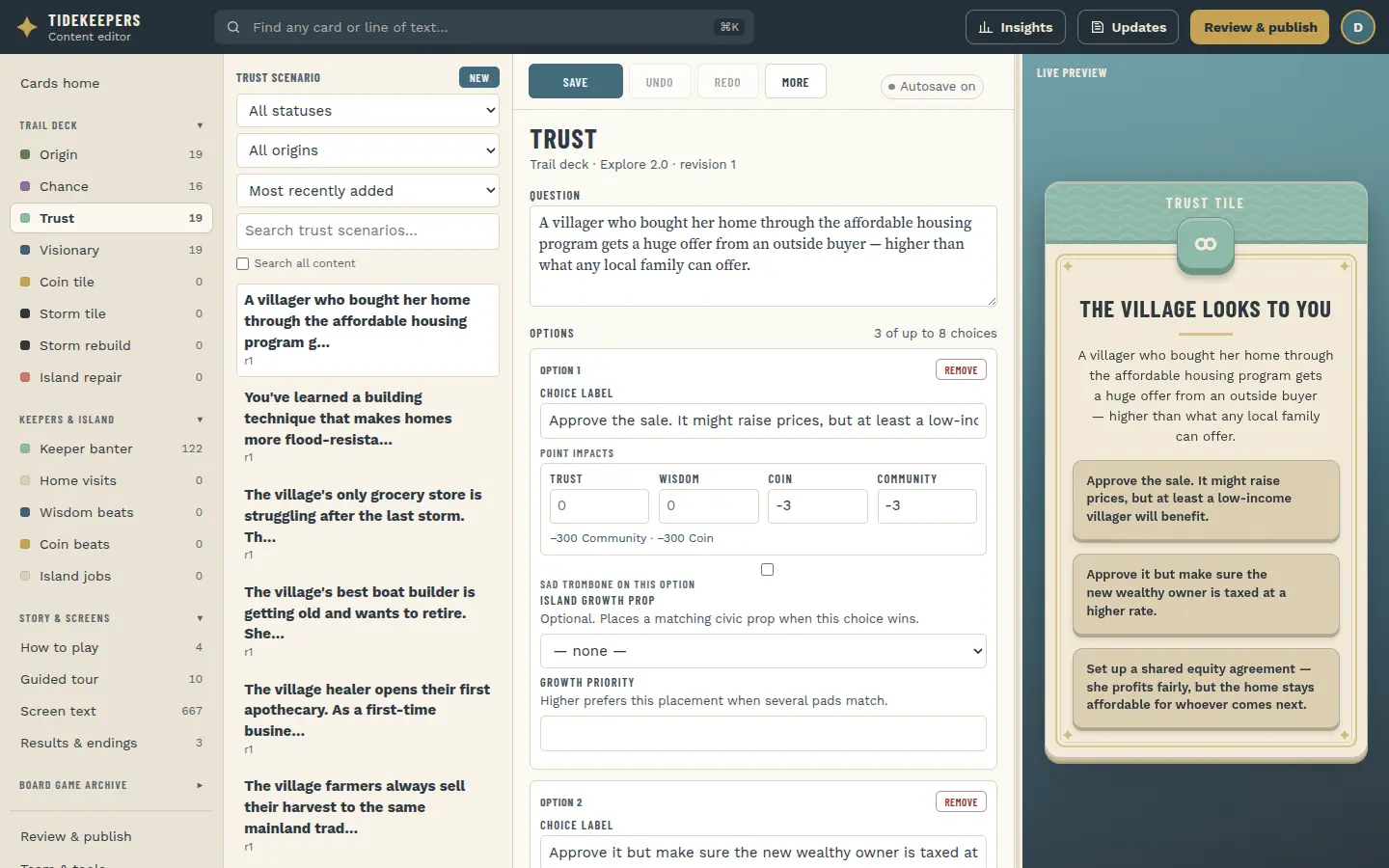
Open any card and the preview on the right is exactly what a player will see, updating as you type. Changes save on their own with undo and redo. Editors can reach every card in the game: the trail deck, keeper conversations and visits, island jobs, How to Play, screen text, and results and endings including the end-of-game question.
Review every word, then publish
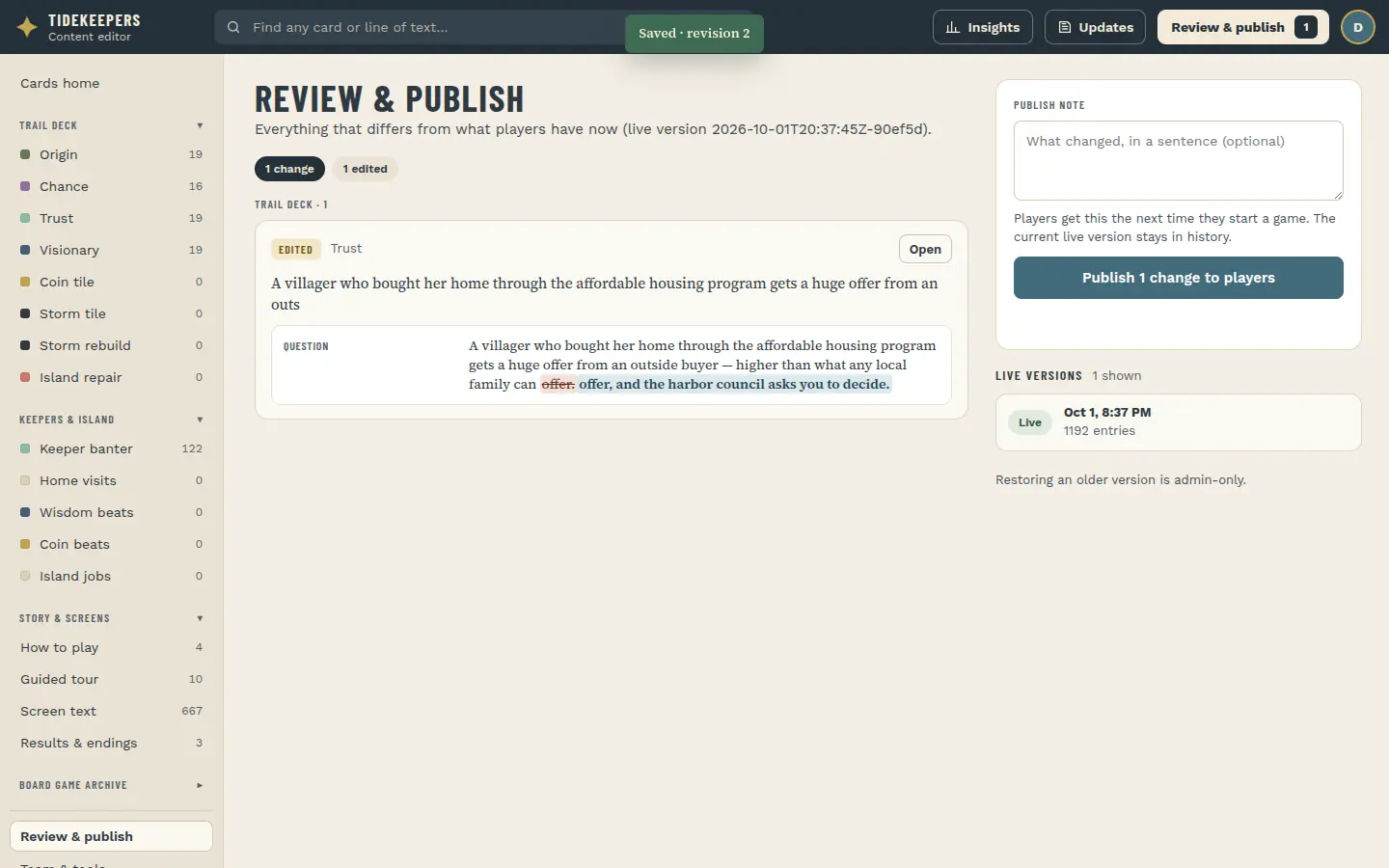
Review & publish shows only what differs from what players have now, with removed words struck through and new words highlighted. Add a note, publish, and players get it on their next game. The previous version stays in history so an admin can restore it, and a publish can never drop live content.
Moving the island without code
The Map editor opens the live island in 3D. Objects such as the harbour and town scoreboards can be dragged and rotated into place. A drafted pose stays off the live island until an admin presses Publish, so map updates are as safe as copy changes. Characters have a Studio that previews each model playing its real in-game animations.
The rest of the toolkit
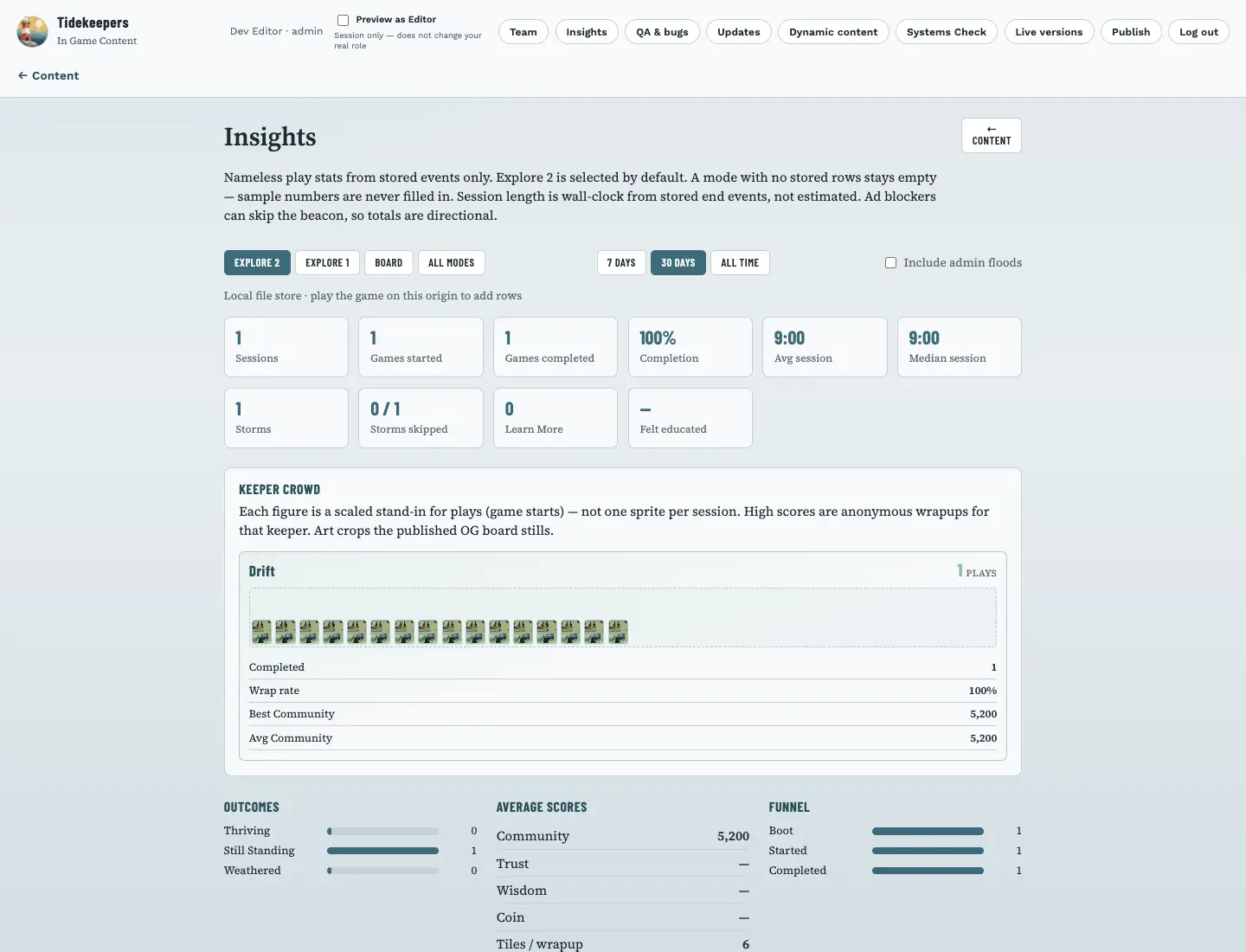
- Insights reports real play from stored events: storms, skips, difficulty, tiles collected and repairs.
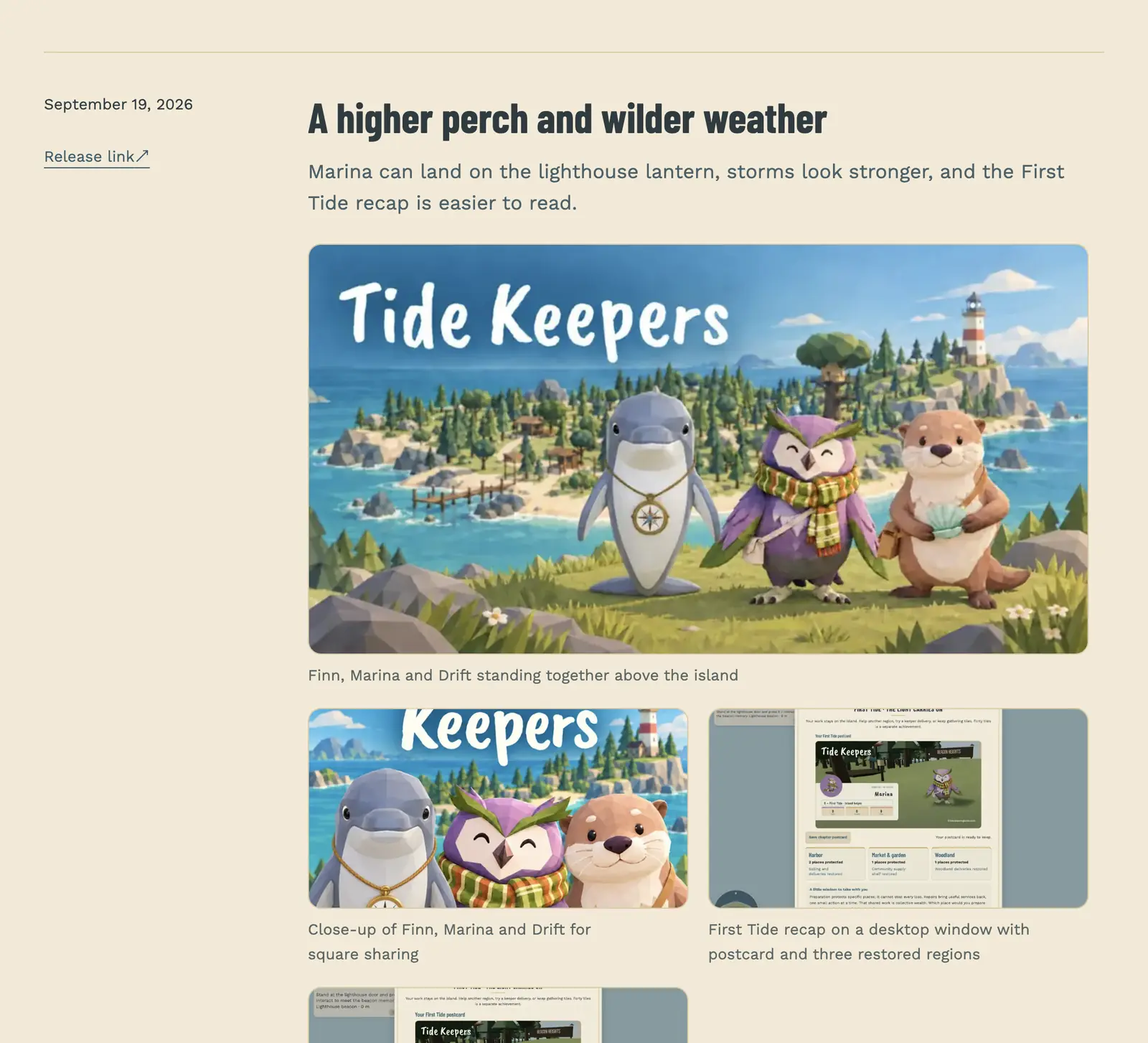
- Updates turns every release into an illustrated report with screenshots, and admins choose which ones appear on a public release-notes page.
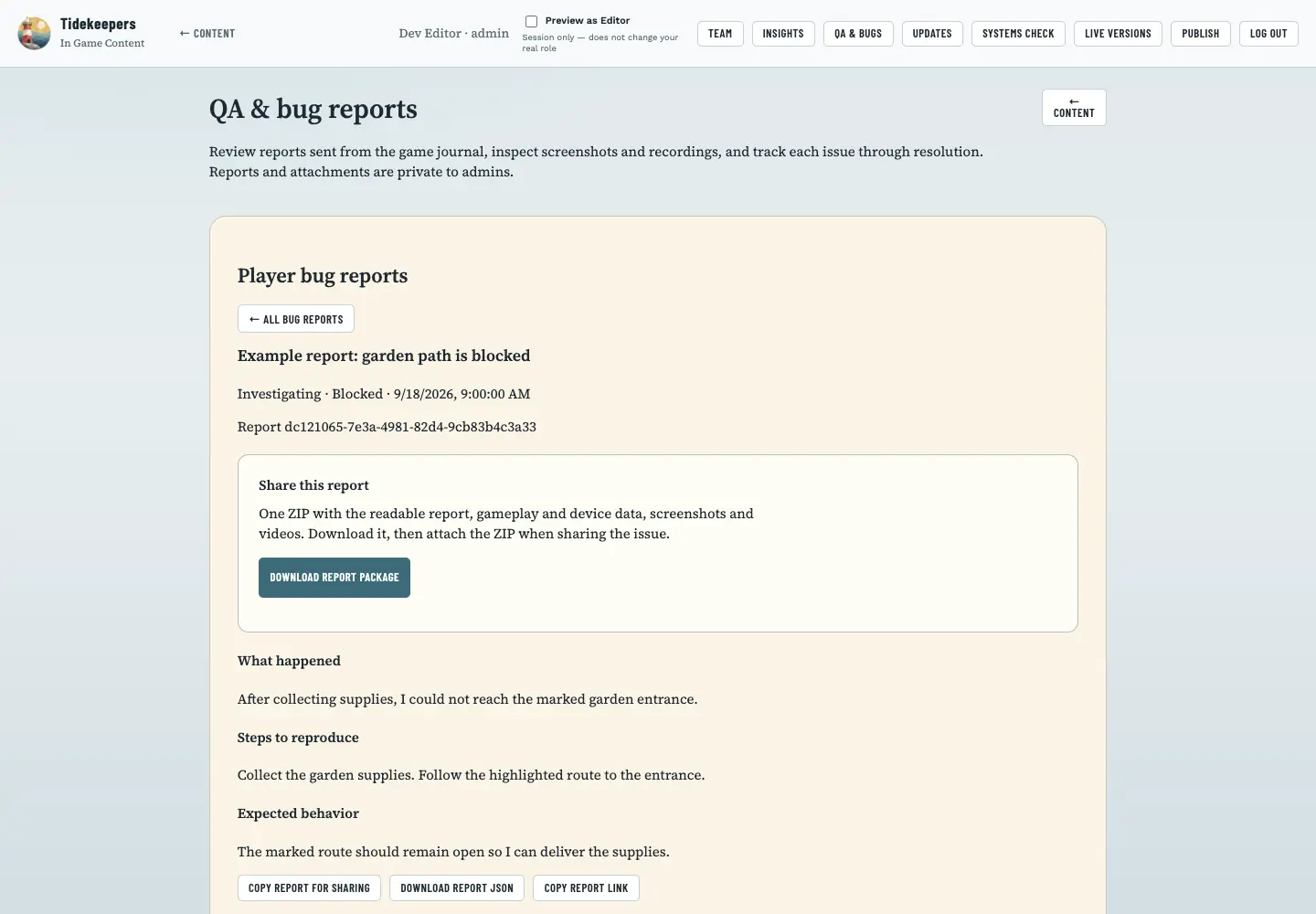
- Bug reports filed from the in-game journal arrive in admin as one download with the report, device and gameplay data, screenshots and video.
- It all works on a phone, with the sidebar folding into a menu.
What shipped
- A walkable low-poly island with three playable keepers: Drift the otter runs and slides, Marina the owl flies, Finn the dolphin swims
- 40 path tiles whose cards are small dilemmas, and civic choices that appear on the island as buildings
- Storms that gather, flood and scar the island, with damage that stays until someone repairs it
- A day and night cycle, a sail race, a lighthouse and a treehouse to climb, and four market regulars
- Generated, curated sound: effects, rotating island themes, three tiers of storm music and keeper voice lines
- Touch, keyboard, mouse and controller play, with a phone that can become a gamepad for a bigger screen
- A CMS the client’s editors run themselves: cards with a live preview, word-level review and publish, a 3D map editor, insights, release notes and bug report packages
Where it landed
Tide Keepers is live at tidekeepersgame.com. A player picks a keeper, walks an island built by hand, makes choices that literally build their village, watches a storm test it, and leaves with a question about what collective wealth means. The client’s editors keep the words, the endings and the map current on their own.
The biggest lesson was the pivot itself. The board game was a sound design, and building the second idea anyway, then letting the client play both, is what produced the game they wanted.
Client: NationSwell. Creative partner: What Else (tile copy, image references, character and board reference imagery and video). Game design, 3D, interaction design, development and CMS: Waldo.